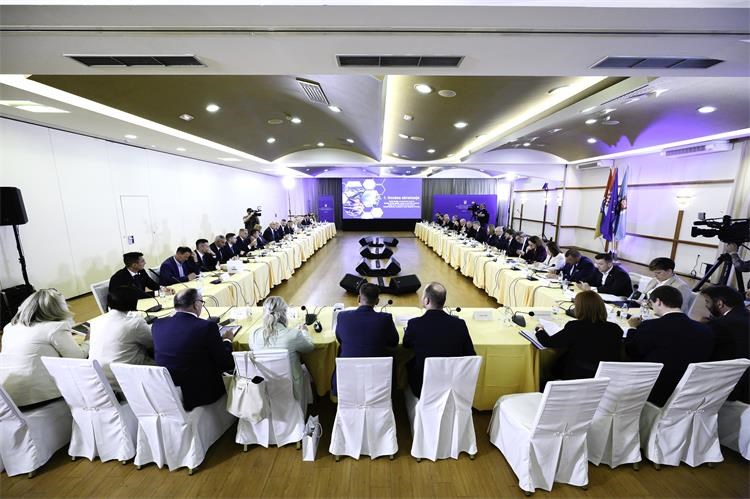
Hina - Prime Minister Andrej Plenković said on Wednesday that total investments in urban development in Croatia are approaching €1 billion, stressing that balanced regional development remains one of the government’s key policy priorities.
Speaking at the inaugural session of the Urban Development Council in Karlovac, Plenković said the investments are being implemented through Integrated Territorial Investments (ITI), the Urban Development Fund and contributions from local authorities.
The new Urban Development Council was established under the Regional Development Act and brings together mayors of county seat cities.
“Today’s topics included investments through the Integrated Territorial Investments mechanism, amounting to €681 million for areas where two-thirds of the population live, plus a separate Urban Development Fund managed by the Croatian Bank for Reconstruction and Development, worth an additional €180 million,” he said.
He added that, together with local co-financing and other stakeholders, total investment reaches close to €1 billion, aimed at decentralisation and balanced regional growth.
Plenković said implementation of these projects directly supports local leaders who are closest to citizens through elected office.
The meeting took place during negotiations on the EU’s future multiannual financial framework after 2027, with Croatia seeking to ensure continued funding for urban development policies.
ITI mechanism to expand to Velika Gorica
The Integrated Territorial Investments (ITI) mechanism currently covers 22 cities and their wider urban areas and will be extended to the Velika Gorica urban area in the next period. So far, 102 calls for proposals worth a total of €513.9 million have been launched, 125 contracts worth €296 million have been signed, and nearly €98 million has been paid out.
Minister of Regional Development and EU Funds Nataša Mikuš Žigman said the Urban Development Council has been institutionalised under a new law that entered into force on 7 May, enabling direct communication between the government and cities on projects and future investments.
She said this cooperation is helping deliver projects that revitalise urban areas, attract investment to surrounding regions, and strengthen economic and social development.
Minister of Physical Planning, Construction and State Assets Branko Bačić presented measures on affordable housing aimed at improving access to cheaper purchase and rental options, while Minister of Culture and Media Nina Obuljen Koržinek outlined new conservation frameworks for the restoration of cultural and historic urban areas.
Affordable housing, it was noted, is one of Croatia’s key development priorities and an important prerequisite for demographic renewal, social cohesion and the competitiveness of urban areas.
News |
Information