- Published: 30.10.2025.
Eighth Central Conference on Sustainable Construction held in Zagreb
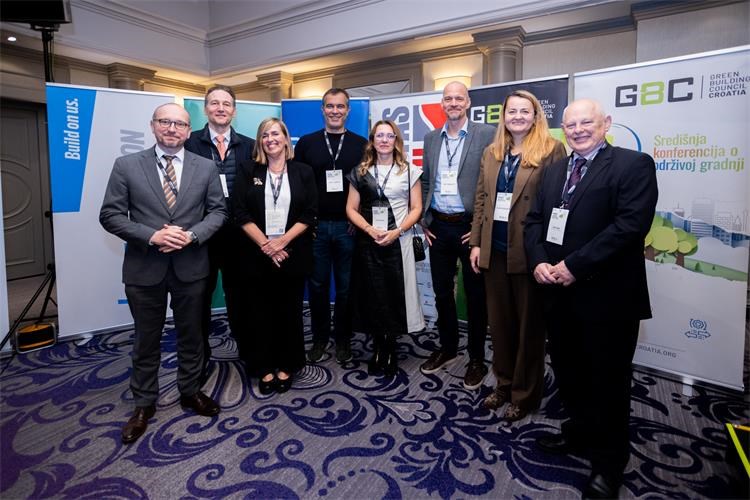
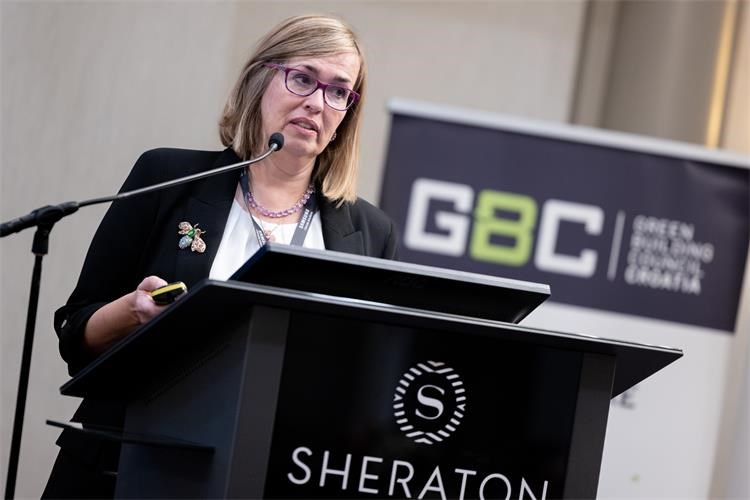
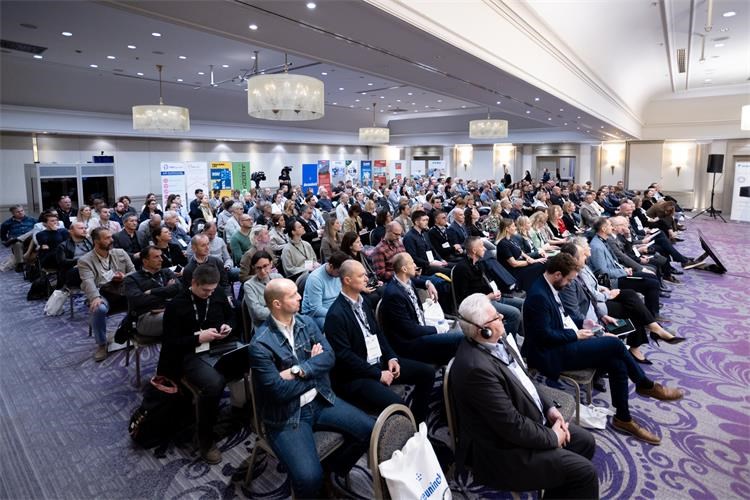
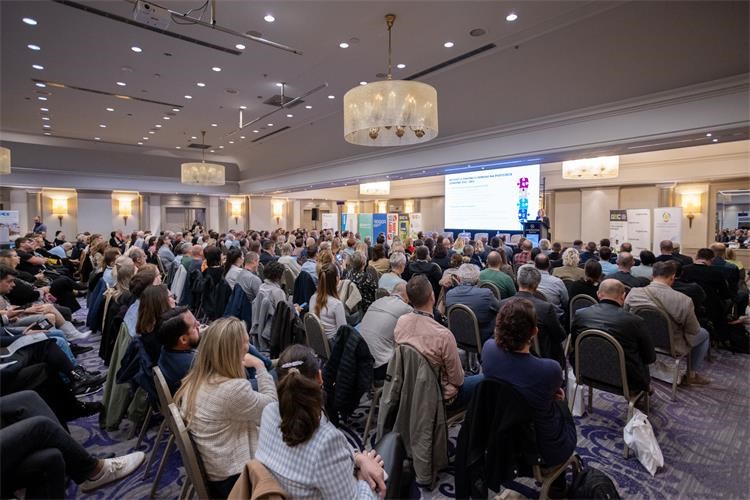
The 8th Central Conference on Sustainable Construction was held in Zagreb in the Sheraton hotel, organised by the Green Building Council (GBC) Croatia. The conference was attended by Director Irena Križ Šelendić.
Once again, the conference gathered over 1000 participants in person and 1000 participants online.The conference was opened by CEO at GBC Croatia Dean Smolar, Chair of the Management Board of GBC Croatia Vlasta Zanki and Chair of the Management Board of the Croatian Association of Thermal Façade System Manufacturers (HUPFAS).
“Sustainability is no longer a trend, but rather the foundation of responsible business practice. Buildings comprise nearly 40% of overall energy consumption and CO2 emissions in Europe, which is why this sector offers a huge potential for change. Our conference gathers all key stakeholders putting the change to practice,” Dean Smolar pointed out, the CEO at GBC Croatia.
Vlasta Zanki, the Chair of the Management Board of GBC Croatia added, “We are extremely pleased that every year we see an increasing interest in sustainable construction. More and more companies, investors and institutions recognise the value and necessity of investing in energy efficiency, sustainable building management and additional certification in accordance with green construction certificates. This is precisely the reason why this conference plays an important role in connecting people, knowledge and good practice.”
Keynote presentations were particularly interesting:
-
Irena Križ Šelendić, the Director of Directorate for Energy Efficiency in the Buildings Sector, European Union Projects and Programmes at the Ministry of Physical Planning, Construction and State Assets, presented current legislative and programme guidelines directing the green transition of the buildings sector. She highlighted the importance of aligning national regulatory framework with European goals, while strengthening professional capacities in the sector.
-
Peter Sweatman, the Director of Climate Strategy & Partners, presented the EU Renovation Loan concept and the key role of the financial sector in accelerating energy renovation of buildings.
-
Ivana Budin Arhanić, a Member of the Board of Valamar Riviere, spoke about the integration of sustainability into the tourism sector in her presentation on Why We Choose Sustainability.
-
Marko Dabrović, an architect and partner in Studio 3LHD, inspired the audience by giving a presentation on Sustainable Cities and talking about the role of architecture in shaping spaces adapted to people, the environment and climate change.
Then, two thematic panels and presentations linking theory and practice were held:
Breathing Buildings - from Comfort to Productivity
The panel dedicated to indoor environmental quality gathered representatives of leading companies and professionals who discussed how ventilation, lighting, noise protection and thermal comfort directly affect the health, wellbeing and productivity of building users. The discussion was moderated by Marko Markić, the Head of Certification at GBC Croatia. The panellists agreed that space quality must be an integral part of sustainability and not just an addition to energy or technical criteria. Doris Wirth (Bluesave & Blueaudit) clarified that DGNB certification system assesses comfort and health of users through measurable criteria, which are becoming increasingly important. Krešimir Benjak (Knauf Insulation) highlighted the growing awareness of thermal protection importance, and the need for better education for contractors, while Hrvoje Krapanić (Daikin) spoke on the role of heat pumps in building electrification and emission reduction. Tomislav Kamenarić (Signify) presented innovation in smart lighting systems combining energy efficiency, visual comfort and digital connection.
New guise of cultural heritage
The panel focused on the important question of energy renovation of buildings with cultural heritage status while preserving their authentic value. The discussion was moderated by Snježana Turalija (Blueaudit & Greenika). In his introductory presentations, Prof. Zoran Veršić (Faculty of Architecture) presented the Guidelines on Energy Renovation of Buildings with Cultural Heritage Status, while Ivana Pećnik (REGEA) showed Contemporary Solutions for Renovation and Revitalisation of Cultural Heritage. These presentations established a framework for discussions on applying the principles of sustainable construction when renovating historic buildings. Panellists Nevena Štrbić (Ministry of Physical Planning, Construction and State Assets), Mirna Sabljak (Ministry of Culture and Media), Jasminka Ćoza (Next Level Consulting), Ivana Pećnik (REGEA) and Prof. Zoran Veršić (Faculty of Architecture) pointed out that the Guidelines are a key document for aligning conservation and energy requirements, but also that their implementation requires close cooperation of all professions and adaptation of the legislative framework.
The project “Mali Vatikan” was given as an example of how renovation can achieve balance between preserving cultural values and improving energy efficiency, while adhering to the principles of sustainable construction.
The presentation of Zagrebačka banka and the European Bank for Reconstruction and Development (EBRD) called “Unlimited Risk Sharing within InvestEU Fund” included specific possibilities of financing green projects and supporting investors in implementing energy transition. The representatives of Zagrebačka banka and EBRD, Ivana Žele and Anamarija Hrvoić Đurić, clarified that this programme sets up more favourable credit terms and risk reduction for financial institutions that invest in projects of energy efficiency, renewable energy sources and sustainable construction. They also presented the EBRD Green Technology Selector (GTS) - a free internet tool which enables the selection of approved green technologies and suppliers, and facilitates the application and implementation of projects meeting the requirements for financing within the InvestEU programme.
The conference was concluded by an inspiring lecture by Ivan Čačić, a meteorologist from the Croatian Meteorological Society, titled What We (don’t) Know about Climate.
By offering an overview of the latest data from the World Meteorological Organisation, Čačić pointed out that 2024 was the warmest year globally since the measurements started, with a rising average temperature of 1.6 °C in comparison to the pre-industrial period. He also warned about the accelerated melting of glaciers, sea level rise, and the increase of extreme weather phenomena such as heat waves and floods, which particularly affect the Mediterranean. Despite worrying indicators, Čačić also highlighted the “good news”, a sudden expansion of renewable energy sources and increasingly better adaptation of cities to climate change through green infrastructure and smart space management.
The 8th Central Conference on Sustainable Construction once again established itself as the largest annual gathering of professionals who shape the sustainable future of Croatia’s construction sector.