- Published: 29.01.2026.
Government adopts programmes for installing elevators and renovating facades of existing buildings
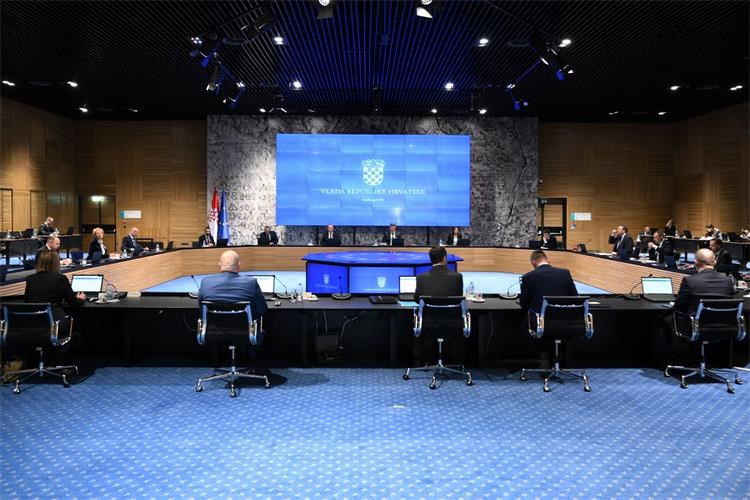
At today’s session, the Government adopted the Programme for installing elevators and accessibility equipment in existing buildings for people with reduced mobility and the Programme for renovating façades of existing buildings. These measures are aimed at improving the quality of housing in existing buildings.
Public calls for both programmes will be published once a year, with the first ones expected in March 2026. Programme details were presented by Deputy Prime Minister and Minister of Physical Planning, Construction and State Assets Branko Bačić.“The foundation for the adoption of these two programmes is set by the National Housing Policy Plan of the Republic of Croatia until 2030, adopted last March, and by the Act on Building Management and Maintenance, which envisaged their adoption. By implementing these programmes, we contribute to the accomplishment of the National Plan’s goals - to provide our citizens with sustainable and good-quality housing,” Minister Branko Bačić said in his introductory statement.
The programmes prescribe financing conditions and models, allocation and payment of funding, deadlines to perform the works, supervision over implementation, public calls procedures, scoring system, application content and the establishment of priority lists, and they apply to existing multiapartment and residential-commercial buildings with co-financing from the state budget.
Programme for installing elevators and accessibility equipment in existing buildings for people with reduced mobility
Lack of elevators in buildings significantly impacts the quality of life of people with disabilities, elderly people, people with reduced mobility and parents of young children. At the same time, the installation of such devices poses a substantial financial burden to co-owners, which is why it is seldom carried out in practice. At the Government’s session, the Minister pointed out that an estimate of 15,000 multiapartment buildings in Croatia can enter the programme.
The requirements necessary to enter the programme, as clarified by the Minister, are that the building must have at least three storeys or that a co-owner or their family member residing in the building is a person with disability with at least 80% bodily impairment of the lower extremities, or a person with a level III or IV functional impairment referring to physical disability. Only buildings with an established co-owners association can be eligible for co-financing, whereby natural person co-owners must hold a majority ownership share. The application must include a developed main design, secured financial resources to cover the applicant’s share and the consent of a simple majority of co-owners for the installation of the elevator.
The state budget will co-finance a third of the overall costs of the installation. Local self-government units can also take part in co-financing, whereby those which ensure larger shares of funding will be given priority.
Priority lists will be established based on a transparent scoring system, which includes the number of storeys, the number of people with disabilities and people over the age of 65 living in the building, the number of pregnant women and young children, the level of development of the LSGU, its contribution to co-financing and the price of installation of the very device. Additional points will be awarded to those buildings that are individual protected cultural property or that are located within a cultural and historical unit.
All interested LSGUs which plan to enter the programme shall contact the Ministry no later than March 1, 2026, in order for the public call to be published the same month. The state budget allocates 2 million euro in 2026 and 3 million euro in 2027 for this programme.
Programme for renovating façades of existing buildings
The Programme for renovating façades has been adopted because façades of culturally protected buildings often cannot be renovated through energy renovation programmes or they only need minor interventions, such as repairing damage, removing graffiti or repainting the façade.
“The programme enables the renovation of such façades with the aim of preserving visual identities and improving the cities’ appearance,” the Minister clarified.
The programme refers to buildings that are protected cultural property or that are located within cultural and historical units, provided that the main design has been developed and that the renovation is not co-financed on another basis. Co-owners are obliged to decide on the renovation by simple majority and to secure funding for their own share of the costs.
Considering high costs of such projects, façade renovations will be co-financed through grants in equal shares from the state and local governments budget (one third), while the remaining part will be secured by co-owners associations.
When ranking applications, priority will be given to buildings that are individual cultural property of A category, older and severely damaged buildings, particularly those that pose a risk to the safety of people and property, as well as buildings that require complex works and buildings with monument characteristics. Contributions to energy efficiency will also be considered, along with the development index of the local self-government units where the building is located.
Local self-government units that plan to enter the programme by co-financing façades renovations are obliged to contact the Ministry by March 1, 2026, and state the overall funding they will secure. The state budget allocates 3 million euro in 2026 and 4 million euro in 2027 for this programme.
Public calls
The Ministry will publish a public call for both programmes, which will thoroughly prescribe the procedure for the allocation of funds, application process, documentation requirements, deadlines, the method of publishing the results, the procedure for submitting appeals, proceeding with the applications upon the completion of the public call, the use of the funds granted, the method of reporting and monitoring the use of funds in accordance with the Act.
Public calls for all interested co-owners associations are expected in March 2026. The programmes are permanent, and public calls will be published once a year.