- Published: 27.11.2025.
Hundreds of kilograms of explosive required to demolish Vjesnik skyscraper
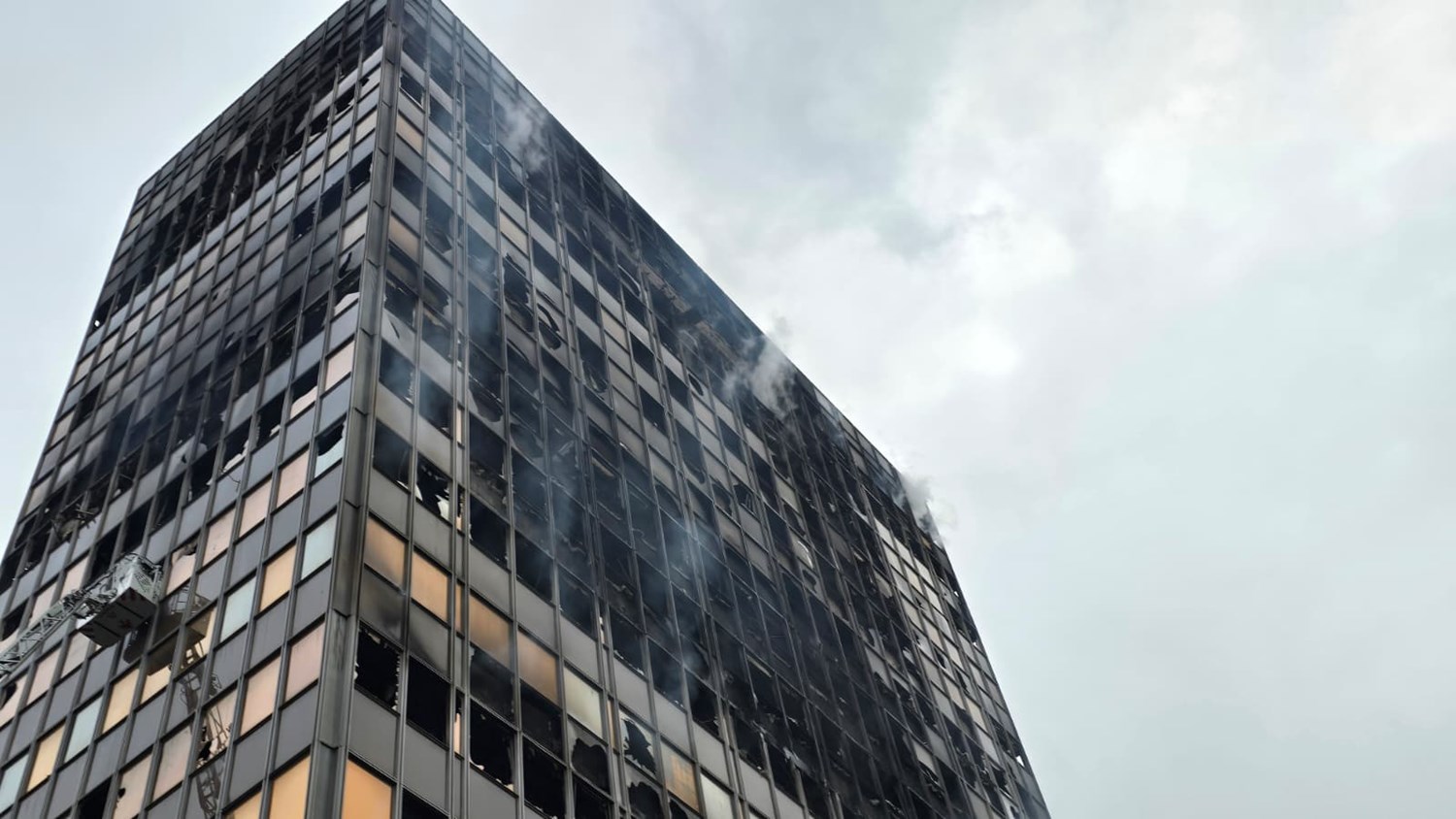
The exact demolition date of the Vjesnik skyscraper is still unknown, but the demolition will most likely be carried out by blasting, which will require hundreds of kilograms of explosives, according to Professor Mario Dobrilović from the Faculty of Mining, Geology and Petroleum Engineering.
Professor Dobrilović, who was on site on Wednesday, confirmed to Hina that demolition will be carried out in several weeks, but the exact date is still unknown because first the project has to be developed.He is in everyday contact with the Ministry of Physical Planning, Construction and State Assets, and he says they still have not received the final decision on the demolition method, but upon inspection, he said blasting is the best solution. The competent institutions will make that decision, he says.
The blasting will require several hundreds of kilograms of explosives, not tonnes, Dobrilović pointed out. He added that the demolition itself lasts for several dozens of seconds, half a minute at most.
Regarding the safety measures, absolutely everything must be done to avoid any risk, and the safety zone, he said, would include the existing one currently applied for traffic regulation.
No special evacuation measures are expected, the Ministry of the Interior will provide clear instructions to residents in the neighbourhood
“But no special evacuation measures are expected here. The Ministry of the Interior will provide clear instructions to residents in the surrounding buildings. One option is that people living in the buildings closest to the skyscraper leave their apartments for half an hour, and the other is that they close the blinds and open the windows to minimise the effects of noise, air blast and dust,” Dobrilović explained.
It is also necessary, he added, to close all traffic and prevent any physical presence of people in that area for half an hour to an hour.
The blasting itself is carried out by drilling blast-holes, filling them with small charges and distributing them across the load-bearing elements that require blasting. Thus, the professor explains, the concrete is blasted, not the entire building, but certain elements in the lower section of the building.
By proper placement of mines, the object is brought down to the designated place
The filling process usually takes one day, after which blasting can start. By proper placement of mines, the object is brought down to the desired place, he says.
And then certain Mr. Newton, whom we all know, does his job, or Mother Earth Gravity, Professor Dobrilović says vividly.
At this point, he does not have an estimated price of the “entire demolition action”.
Regarding damage on other objects within the Vjesnik complex, Dobrilović says that part of the annex will get damaged, and part will remain preserved, such as the Press centre, the printing office. In short, the buildings on the western side, where the Vjesnik skyscraper will fall, will be damaged. But this is, as he says, “collateral damage.”
Source: HINA