- Published: 26.09.2025.
Minister Bačić at the conference M² for the Future – Affordable and Sustainable Housing
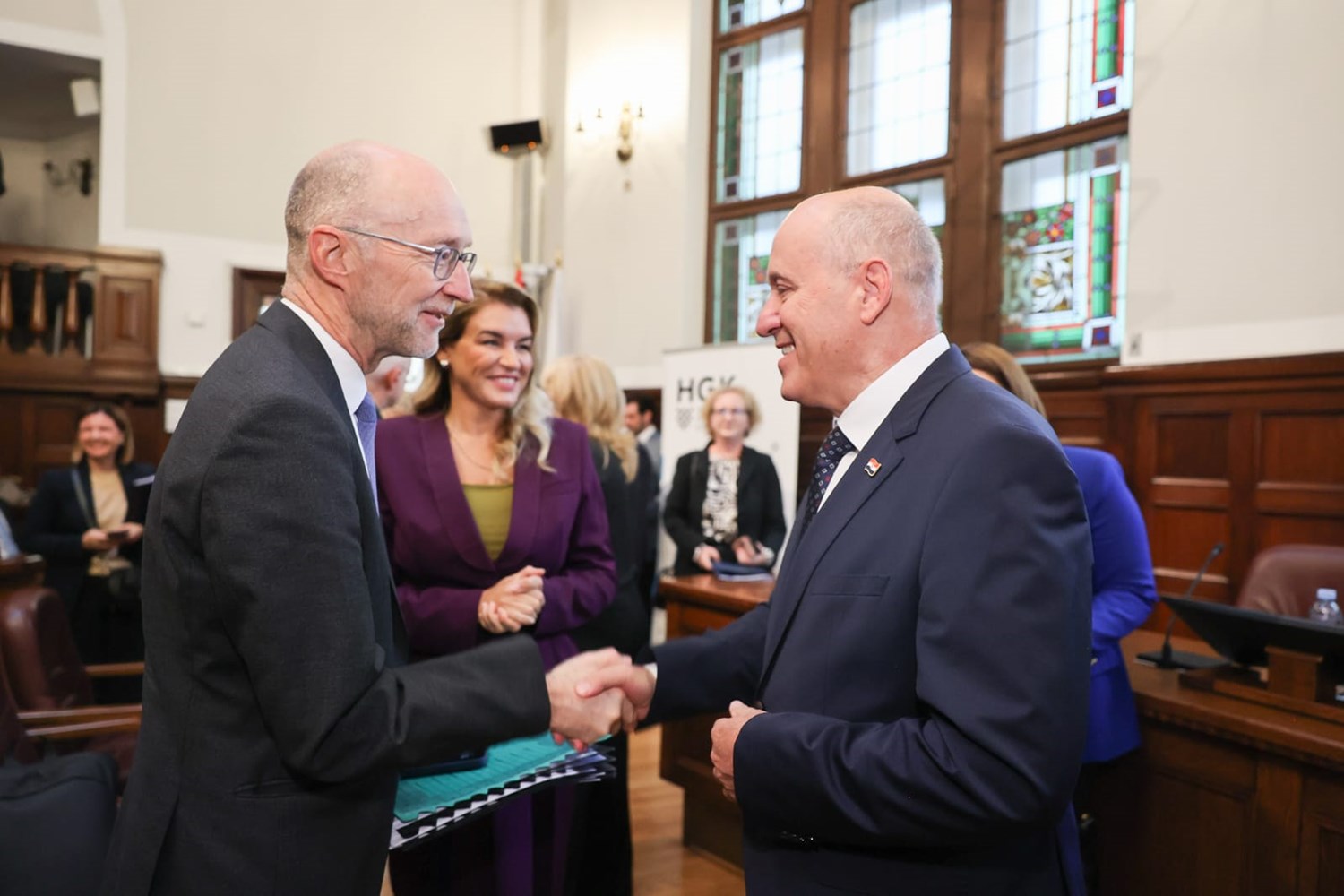
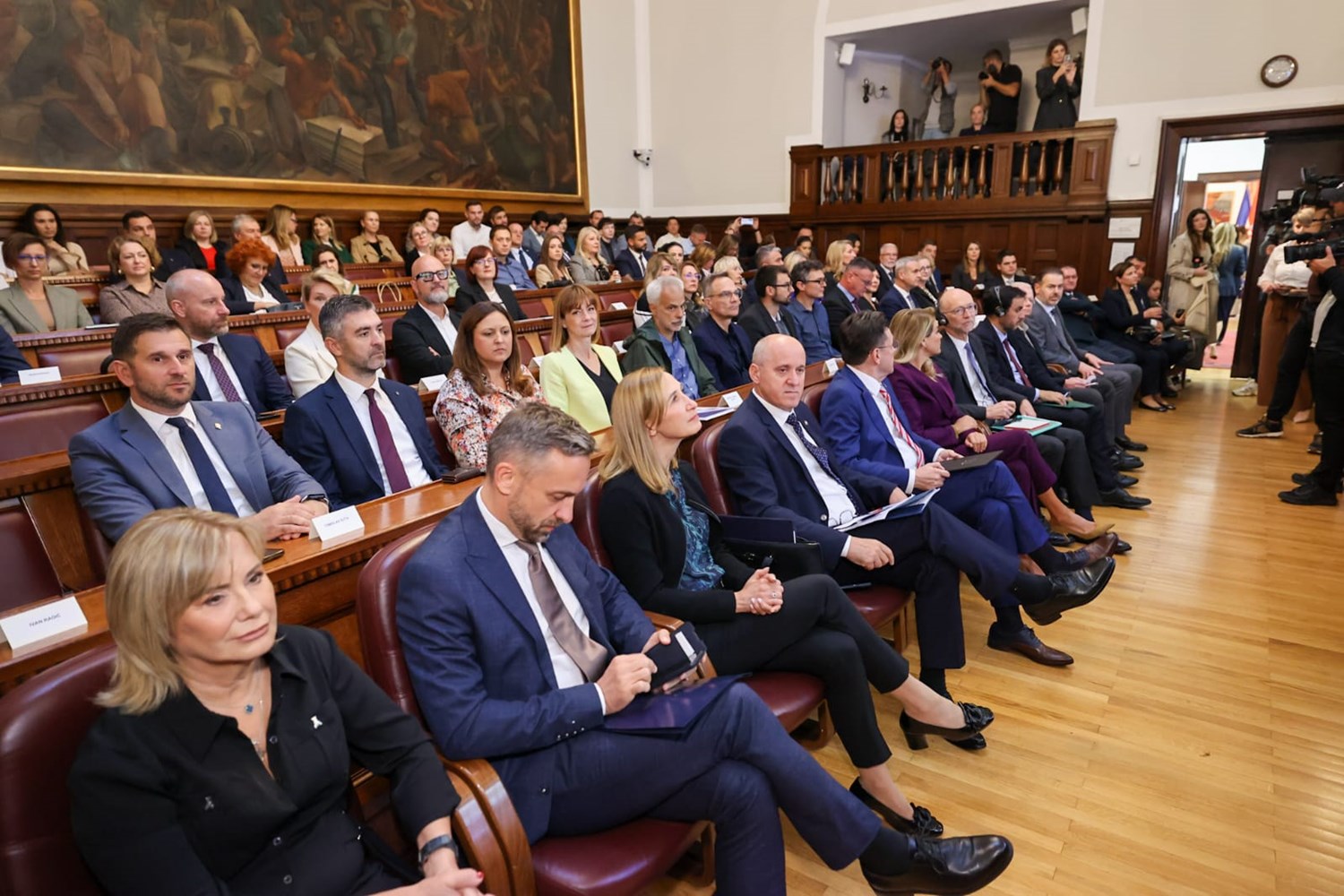
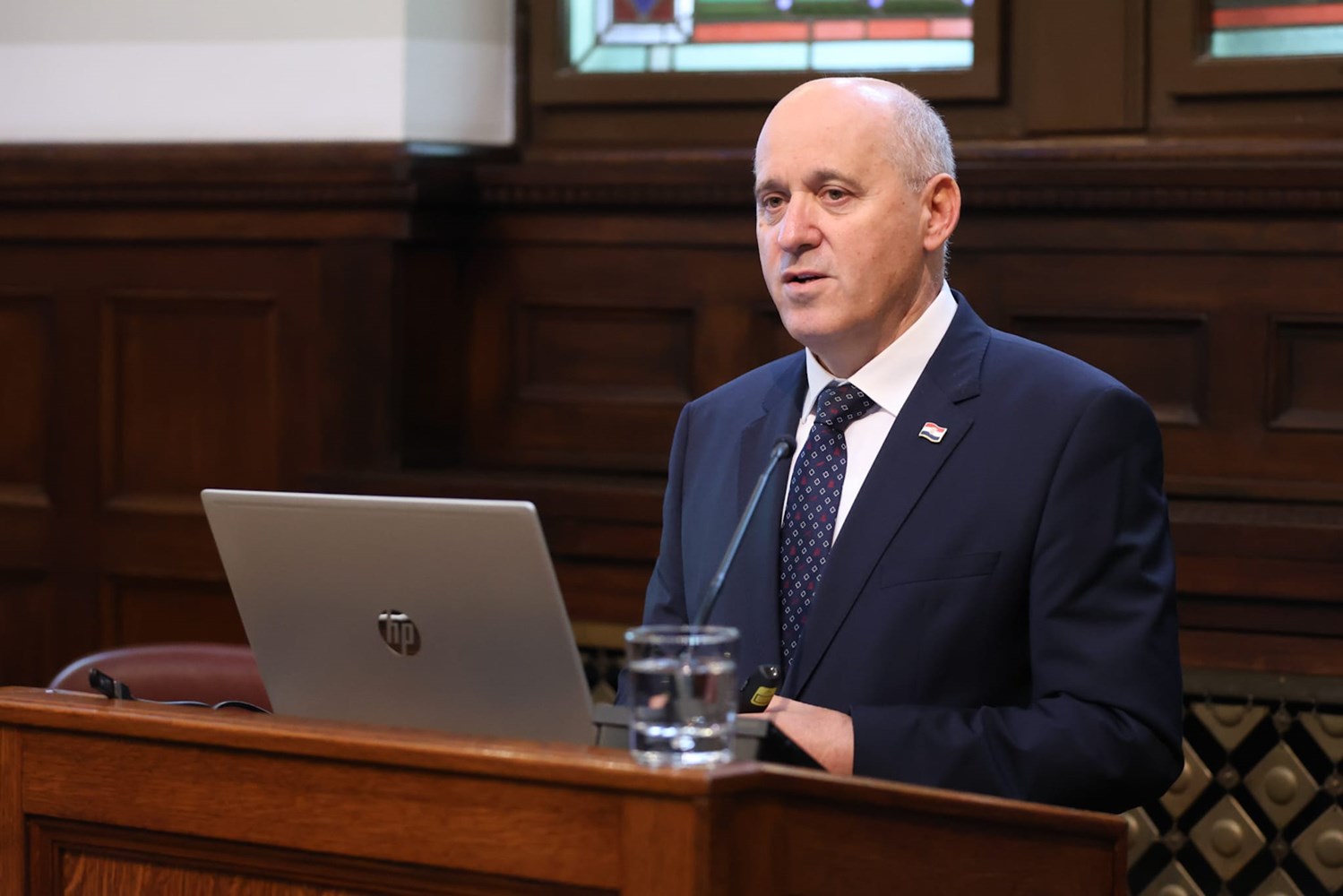
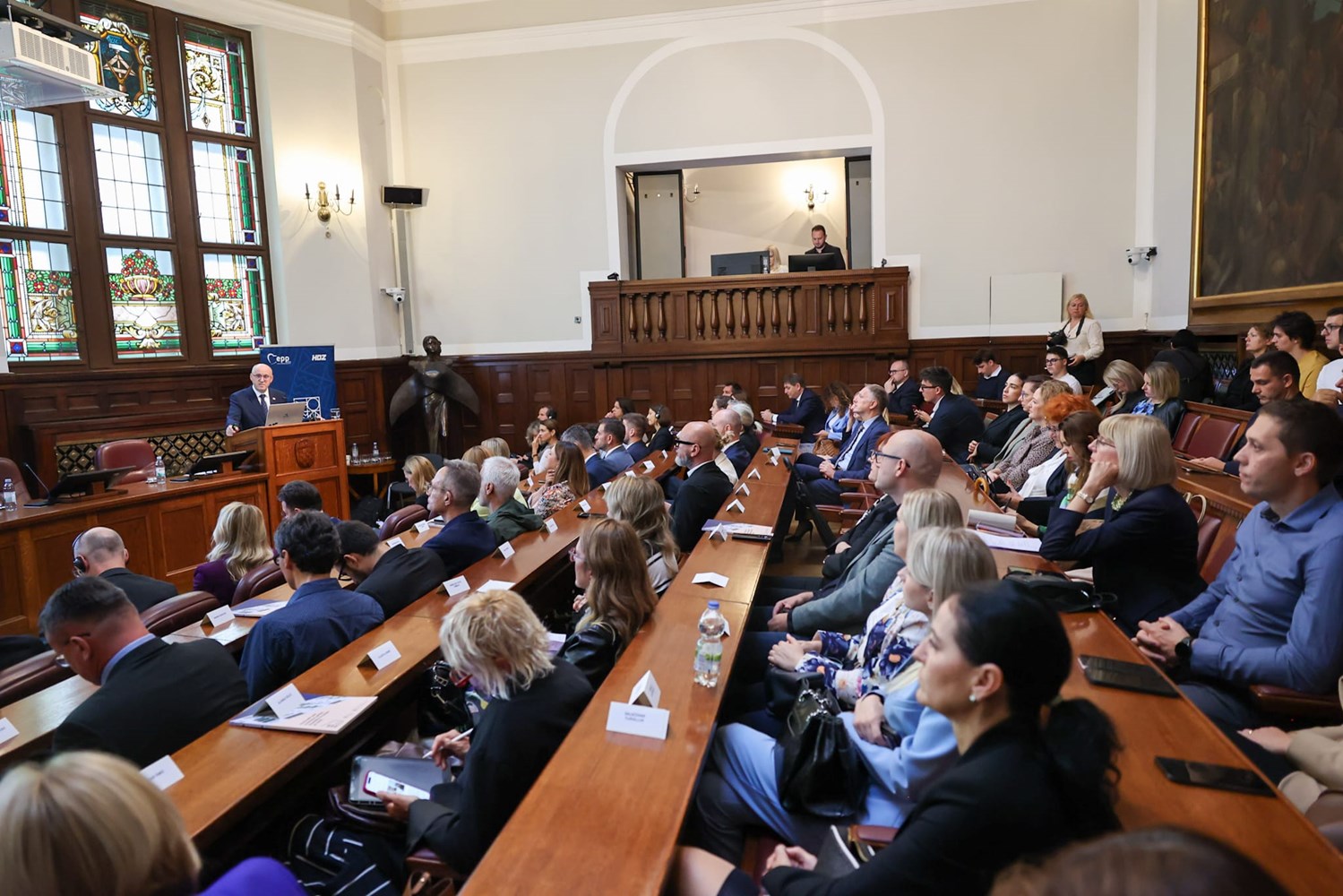
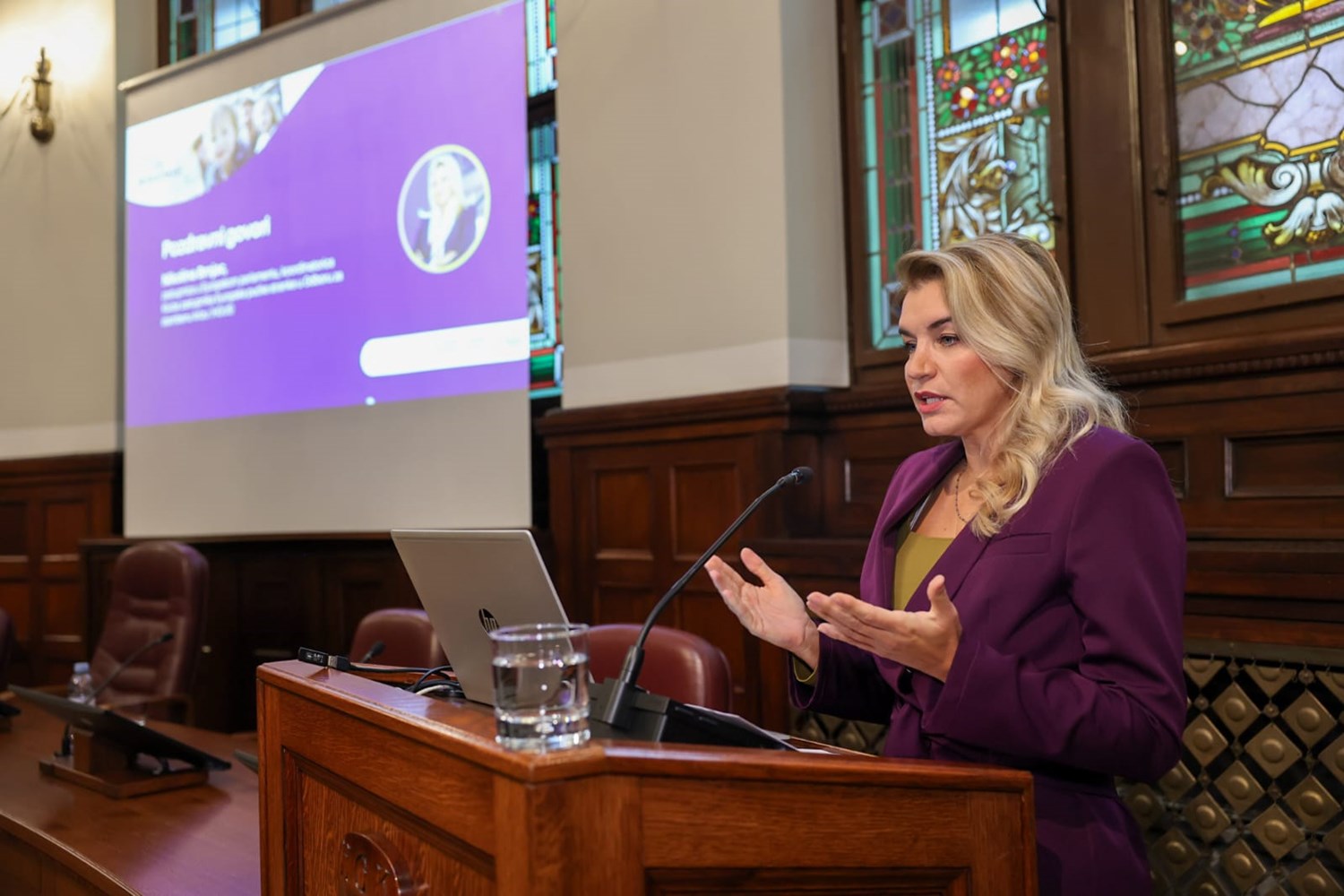
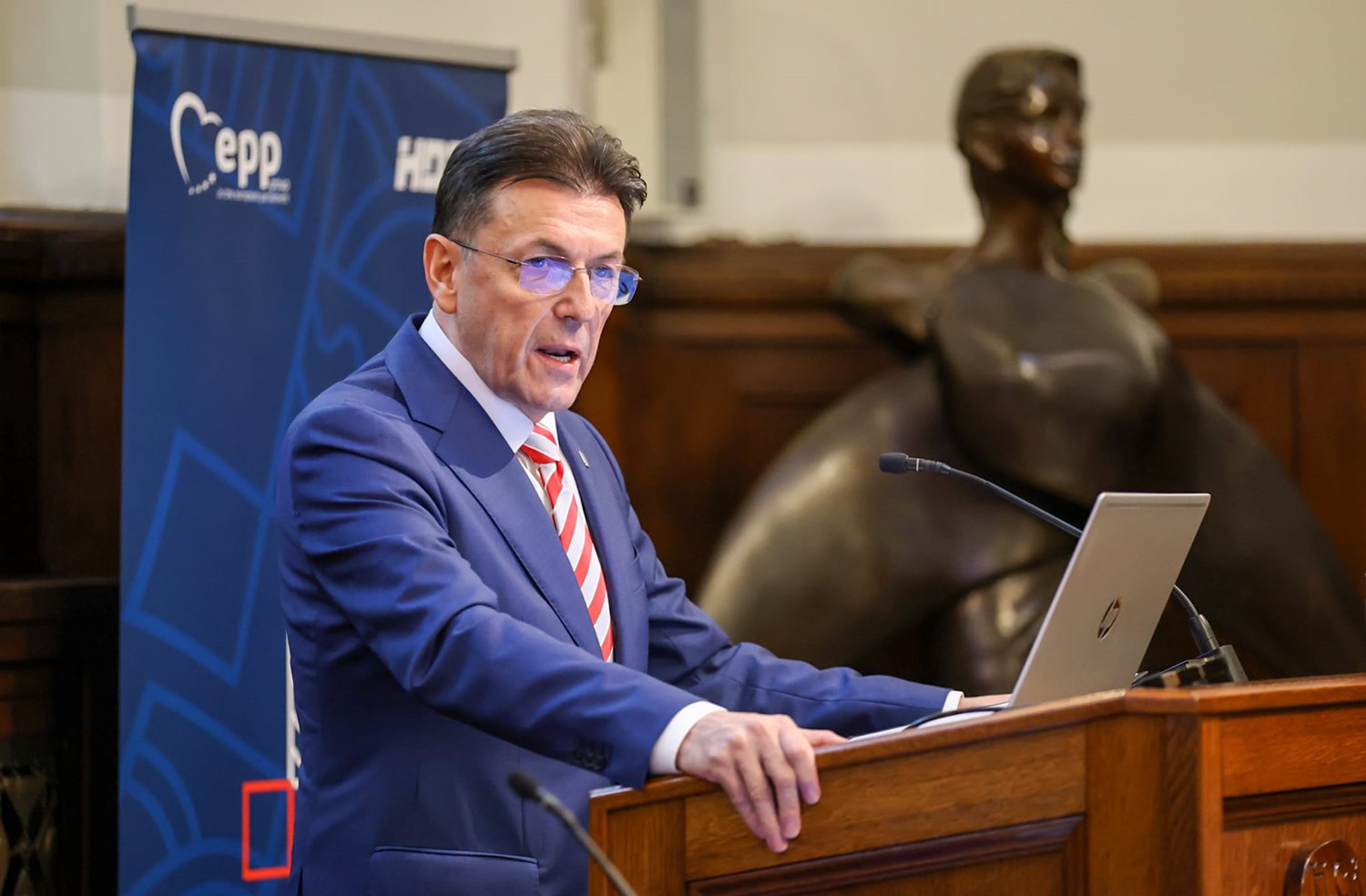
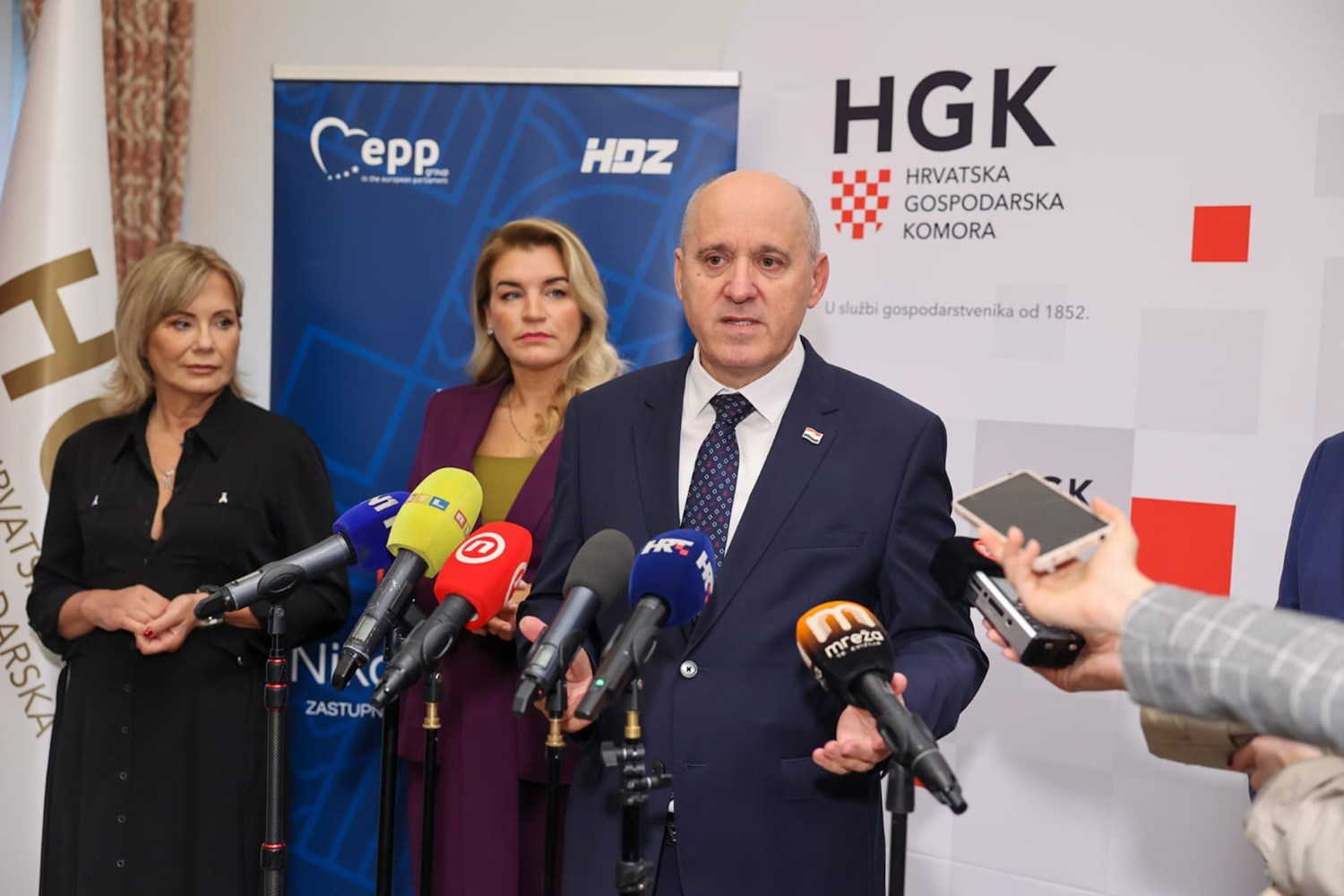
The Great Hall of the Croatian Chamber of Economy in Zagreb houses a conference called M2 for the Future - Affordable and Sustainable Housing under the motto “New generation of affordable housing - build smarter, live better.” The conference centres on the future of housing in Croatia and the European Union, with a special emphasis on interconnection between housing policy, demographic movements and the quality of life. The introductory speech was given by Deputy Prime Minister and Minister Branko Bačić.
The conference was organised by Nikolina Brnjac, a Member of the European Parliament and the coordinator of the European People's Party in the Special Committee on the Housing Crisis (HOUS), the Ministry of Physical Planning, Construction and State Assets, the Croatian Chamber of Economy and the Faculty of Architecture, University of Zagreb.“I am very pleased that today’s conference centres on a highly important topic - sustainable and affordable housing. This is extremely important for the citizens of the Republic of Croatia, and it refers to procedures aimed at retaining young people in Croatia, encouraging those who left to return and to foster economic growth and increase GDP and employment,” President of the Croatian Chamber of Economy Burilović said.
He also welcomed the adoption of the National Housing Policy Plan which will, as he stated, “among many good things, foster affordable rentals as well, which is important for the mobility of our citizens and workers, and which will in turn accelerate and stimulate market changes and enhance productivity.”
The conference gathers representatives from the Government of the Republic of Croatia, European institutions, academic community, experts, civil engineers, architects, urbanists and bankers, all with the purpose of finding the best solutions, Member of the European Parliament Brnjac pointed out.
“We will address the challenges Croatia is facing today, but we will also present good practices and examples already led by Croatia - presented multiple times in EU institutions as a good example. If we want to enable young people to stay in their regions, not only in Croatia but across the European Union, there is a series of solutions underway at the European level. This is precisely why we see housing as one of the main demographic issues and challenges,” Member of the Parliament Brnjac emphasised, noting that she herself started a series of initiatives to make use of the available European funding.
The main presentations of Deputy Prime Minister Branko Bačić and Ministers Nataša Mikuš Žigman and Marin Piletić focused on the National Housing Policy Plan, social measures aimed at families and the possibilities to use the European funding.
Affordable and sustainable housing for all citizens
Minister Bačić expressed his gratitude to Member of Parliament Nikolina Brnjac for her efforts in organising the conference, and to Matthew Baldwin as well, the Deputy Director-General of Directorate-General for Energy and Head of Task Force Housing at the European Commission, who gave an overview of European policies and available financial instruments.
“Housing is a priority for our citizens, one of the fundamental human needs, and one of the prerequisites for demographic revitalisation as well. Unfortunately, the affordable housing challenge now impacts the whole of the European Union, therefore, it is important to find appropriate solutions for the future of our citizens together at constructive meetings such as these,” Minister Bačić pointed out.
He added that, while establishing measures at the EU level, it is necessary to take into consideration the differences among Member States, and regional differences as well - particularly in Croatia. He recalled that in March 2025 the Government of the Republic of Croatia had adopted the National Housing Policy Plan until 2030, aimed at resolving the issue of housing affordability and activating nearly 600,000 vacant apartments in the country.
“We are one of the first states which has adopted a comprehensive housing policy through the National Housing Policy Plan, which provides solutions to housing challenges in the new decade and entails all housing segments - affordability, sustainability and the spatial component. Through collaboration with EU institutions, interdepartmental cooperation and activities of local self-government units, we can form an efficient system for affordable housing, because a home is the foundation of stability and safety for both individuals and families,” the Minister stated.
The Minister’s presentation is available here.
Let us recall, since the beginning of the year, a series of measures aimed at increasing housing affordability and raising the quality of life of the citizens has been established. Tax on real estate not used for housing purposes has been introduced, and tax on short-term tourist rentals has been increased, while such rentals are limited in residential buildings. Subsidies for young people who acquire their first residential real estate have applied - over 800 of them have been approved, in the amount of nearly 7 million euro, and a framework for activating vacant privately-owned housing units has also been established in order to designate them for affordable rentals. Housing care for young families in assisted areas is rapidly implemented, construction projects of 258 new apartments in Osijek, Trogir and Novalja have been initiated. The new Act on Building Management and Maintenance is in force - introducing measures to decompartmentalise housing units, especially in historical units, while a new comprehensive Affordable Housing Act is in development.
The National Housing Policy Plan envisages the construction of 8,000 new apartments, activation of the vacant housing stock on the rental market and alignment with the future European affordable housing plan. This recognises housing as a fundamental human need and a key prerequisite for demographic revitalisation of Croatia and the European Union, which was also highlighted while exchanging experiences and presenting good practices at today’s conference.
The conference programme can be found here.