- Published: 26.01.2026.
Minister Bačić visits post-earthquake reconstruction sites in Zagreb city centre
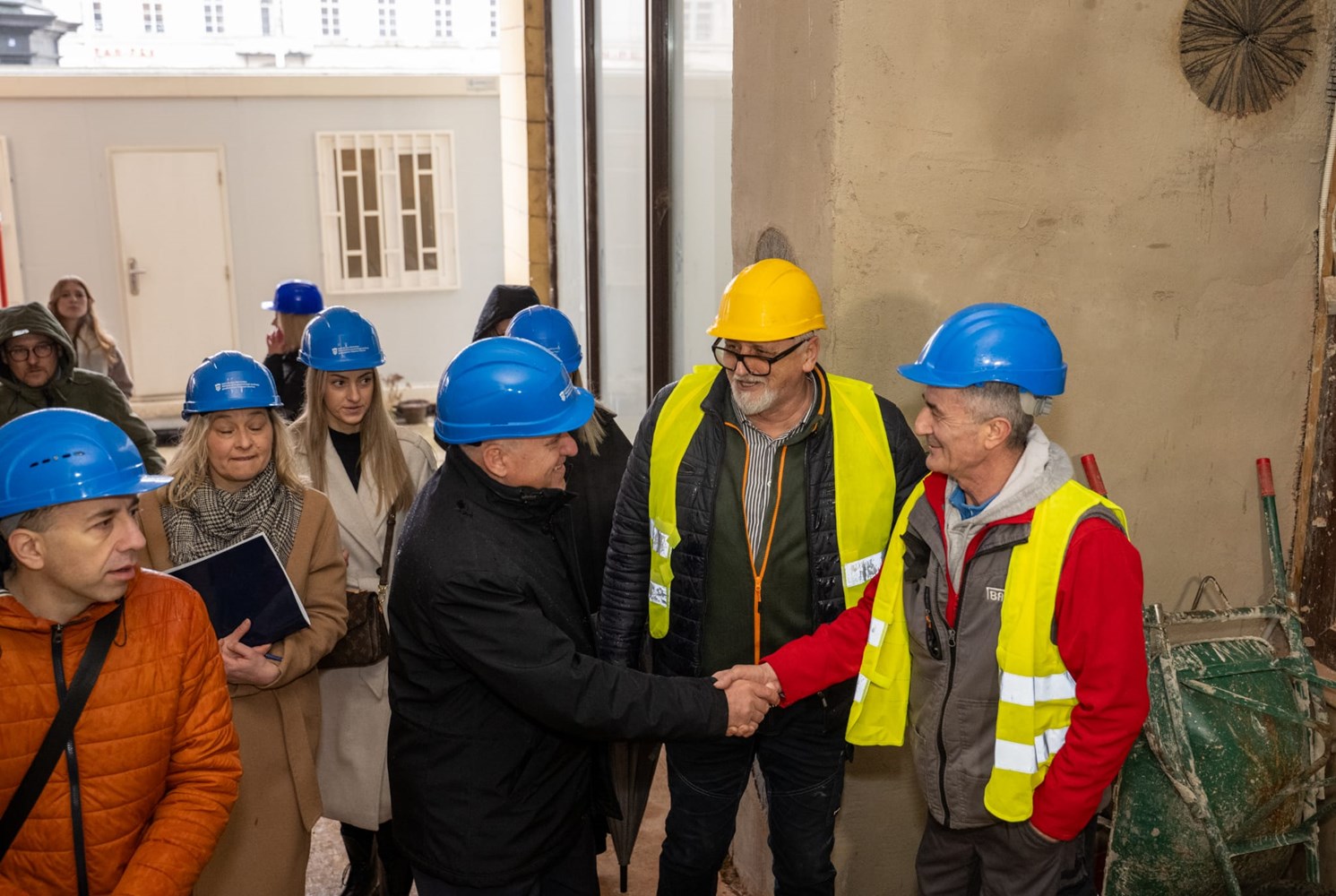
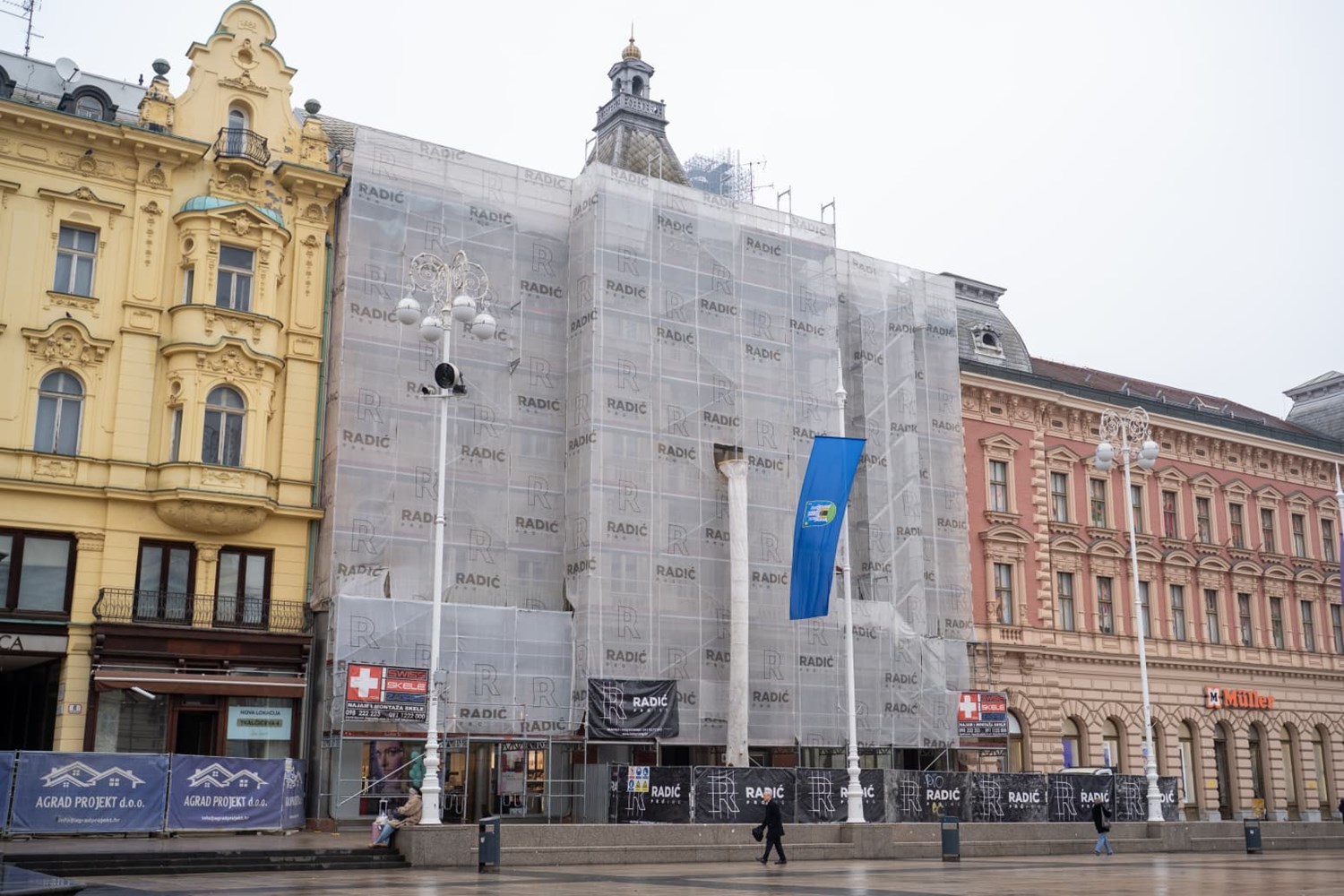
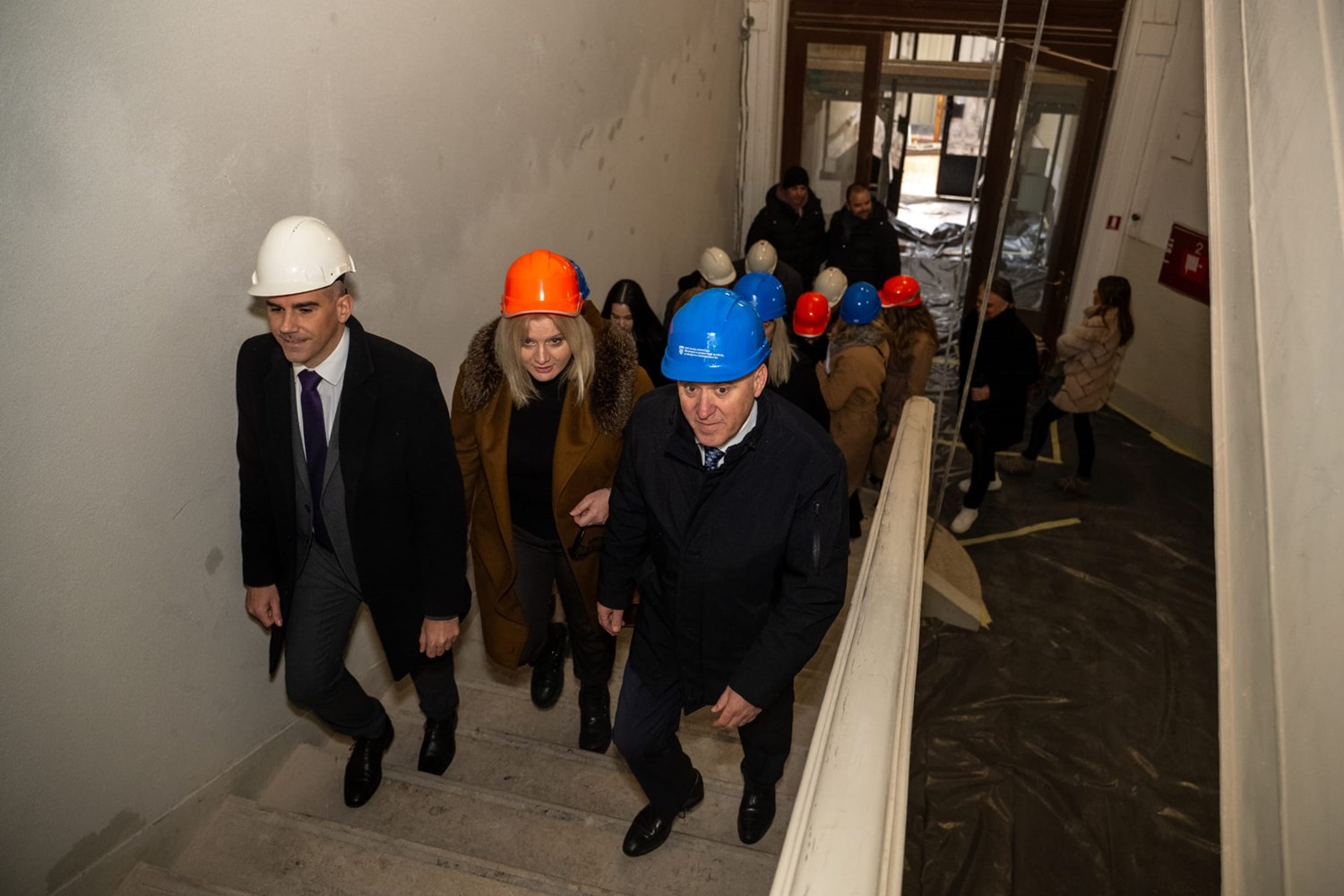
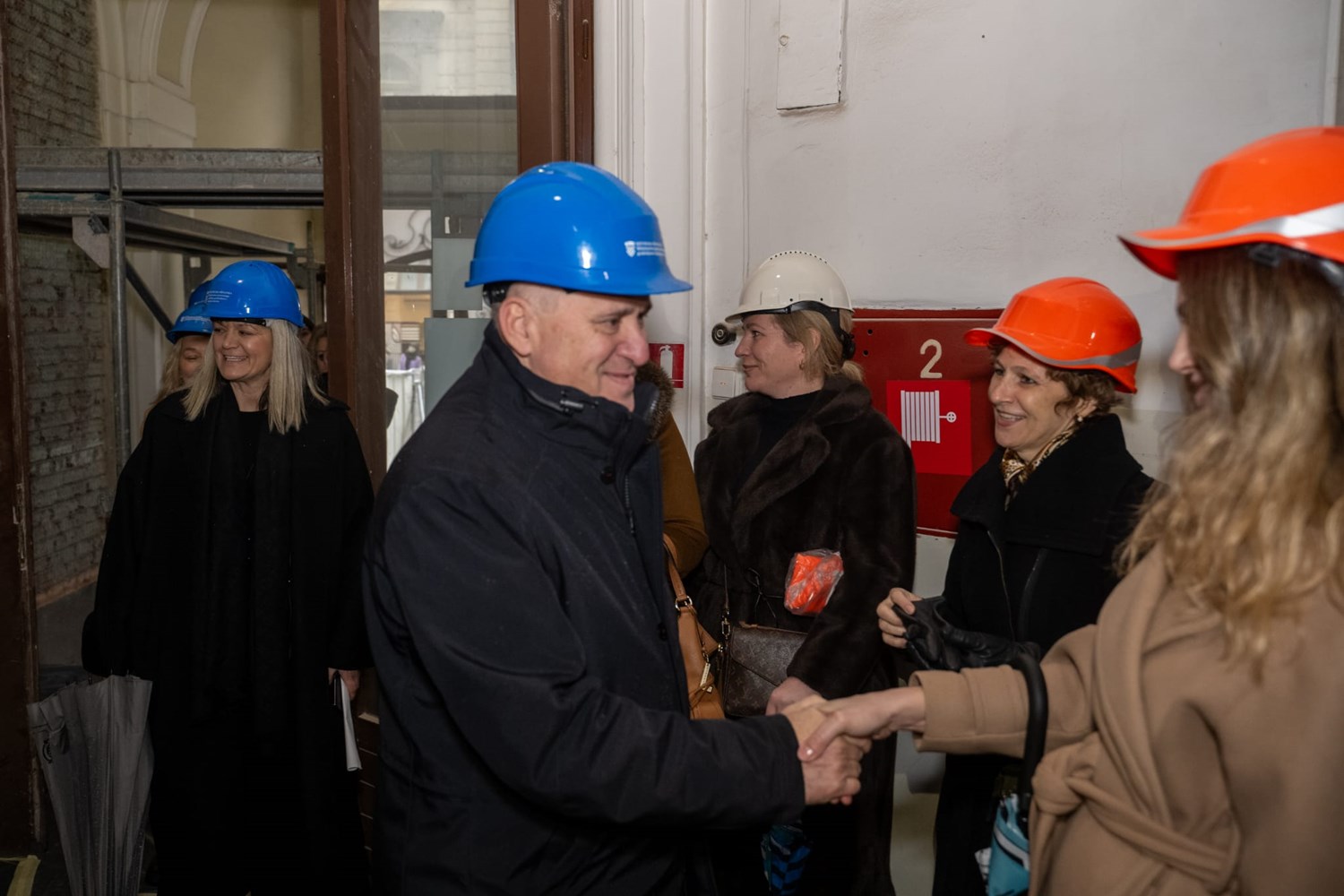
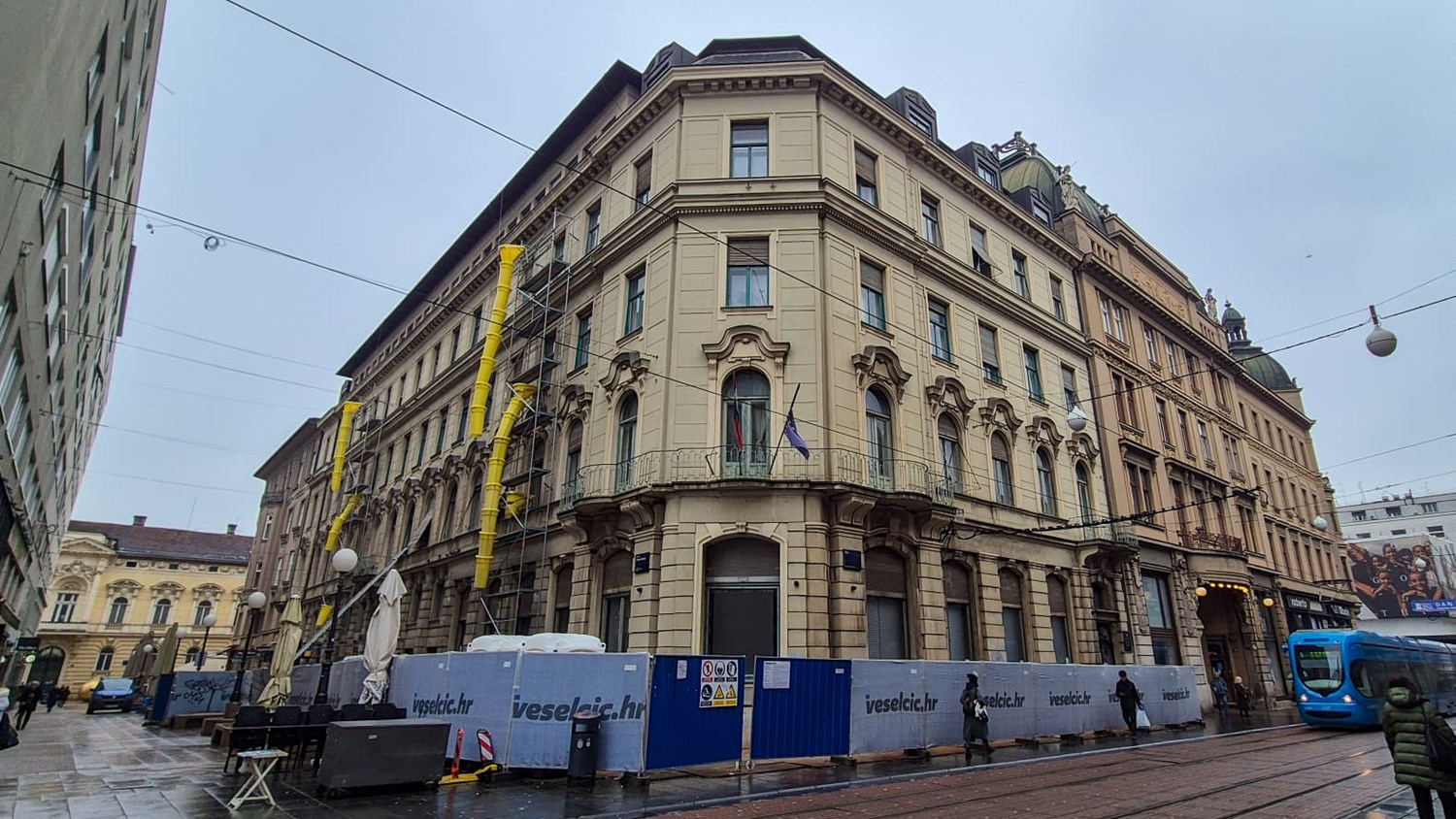
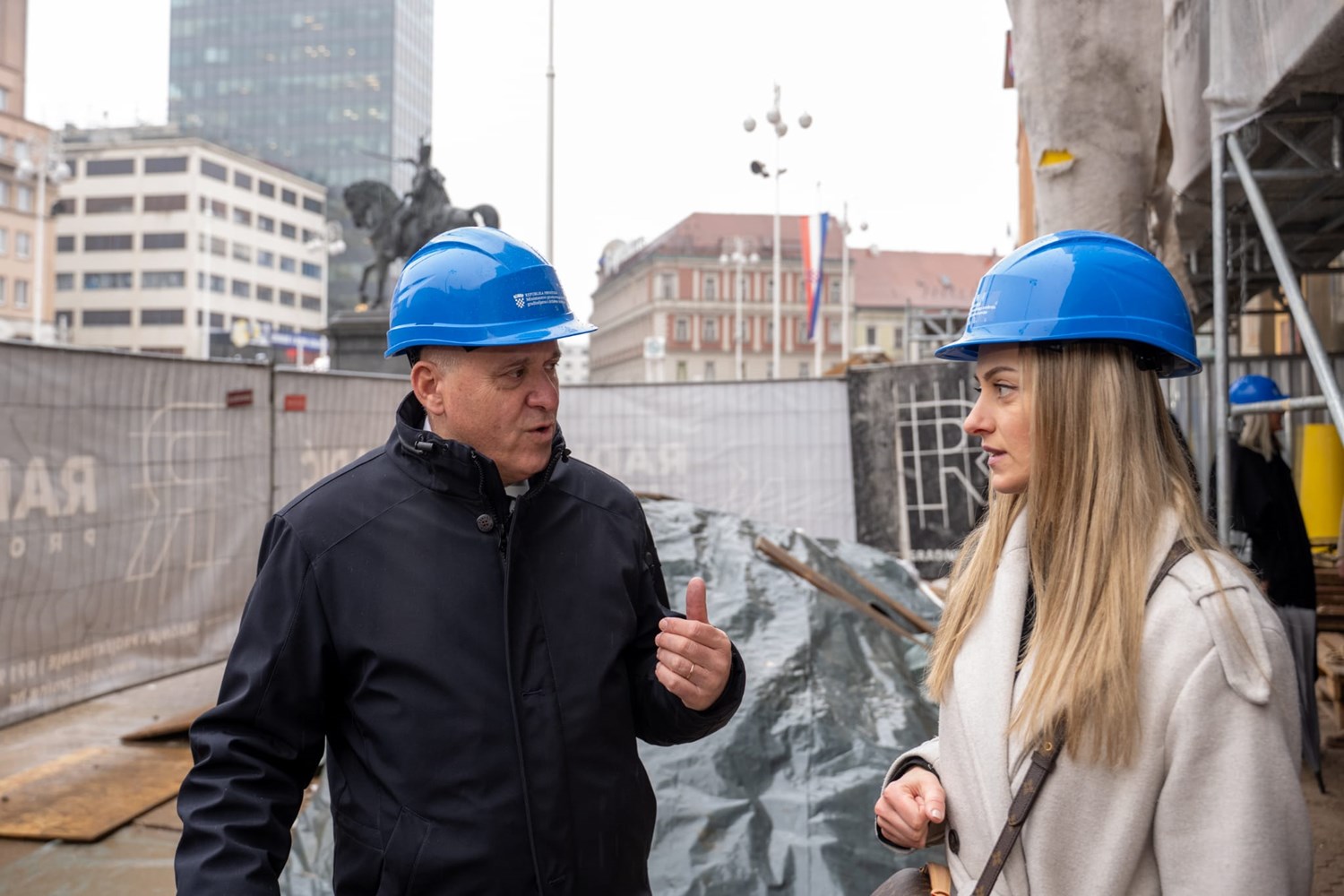
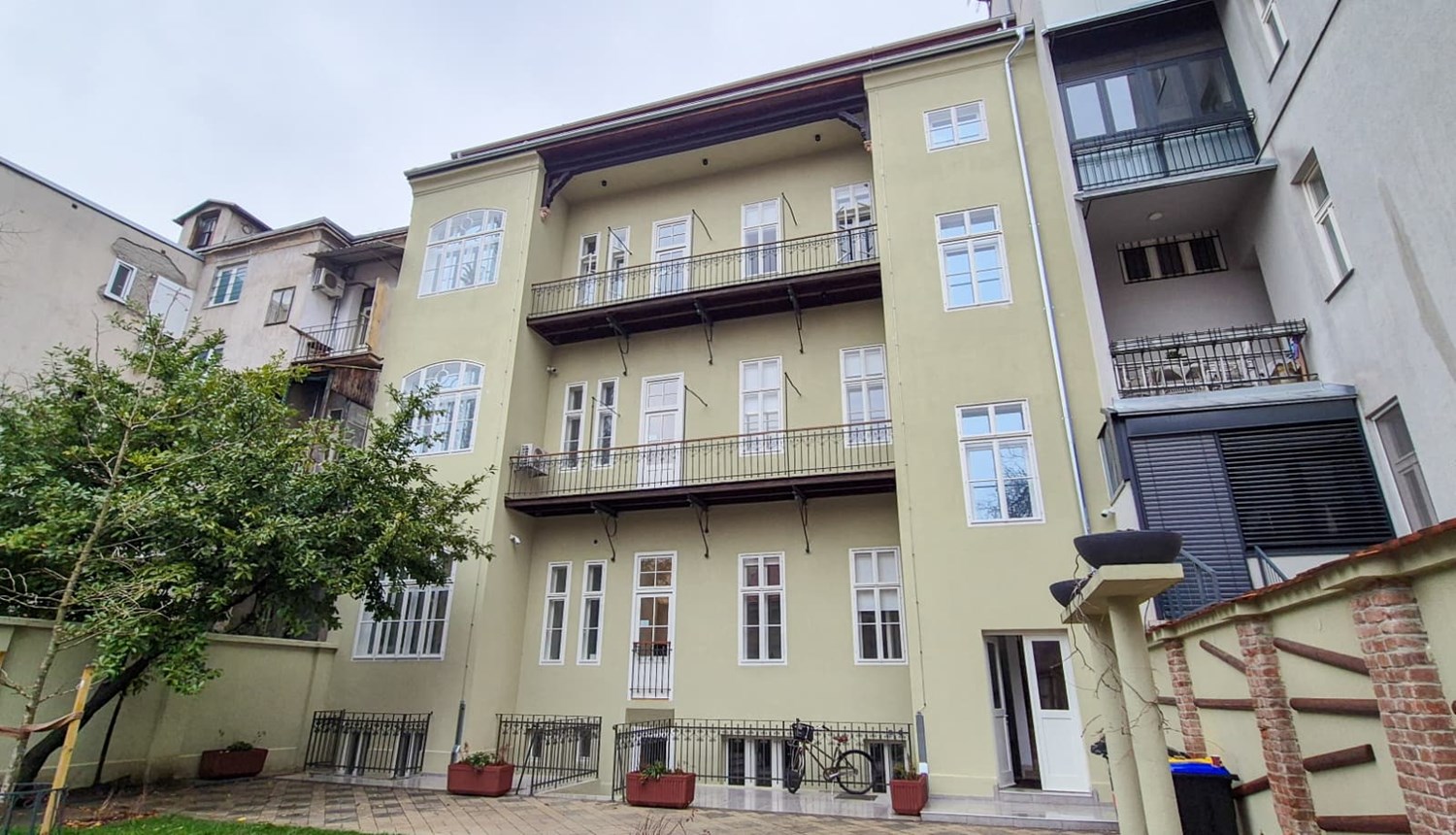
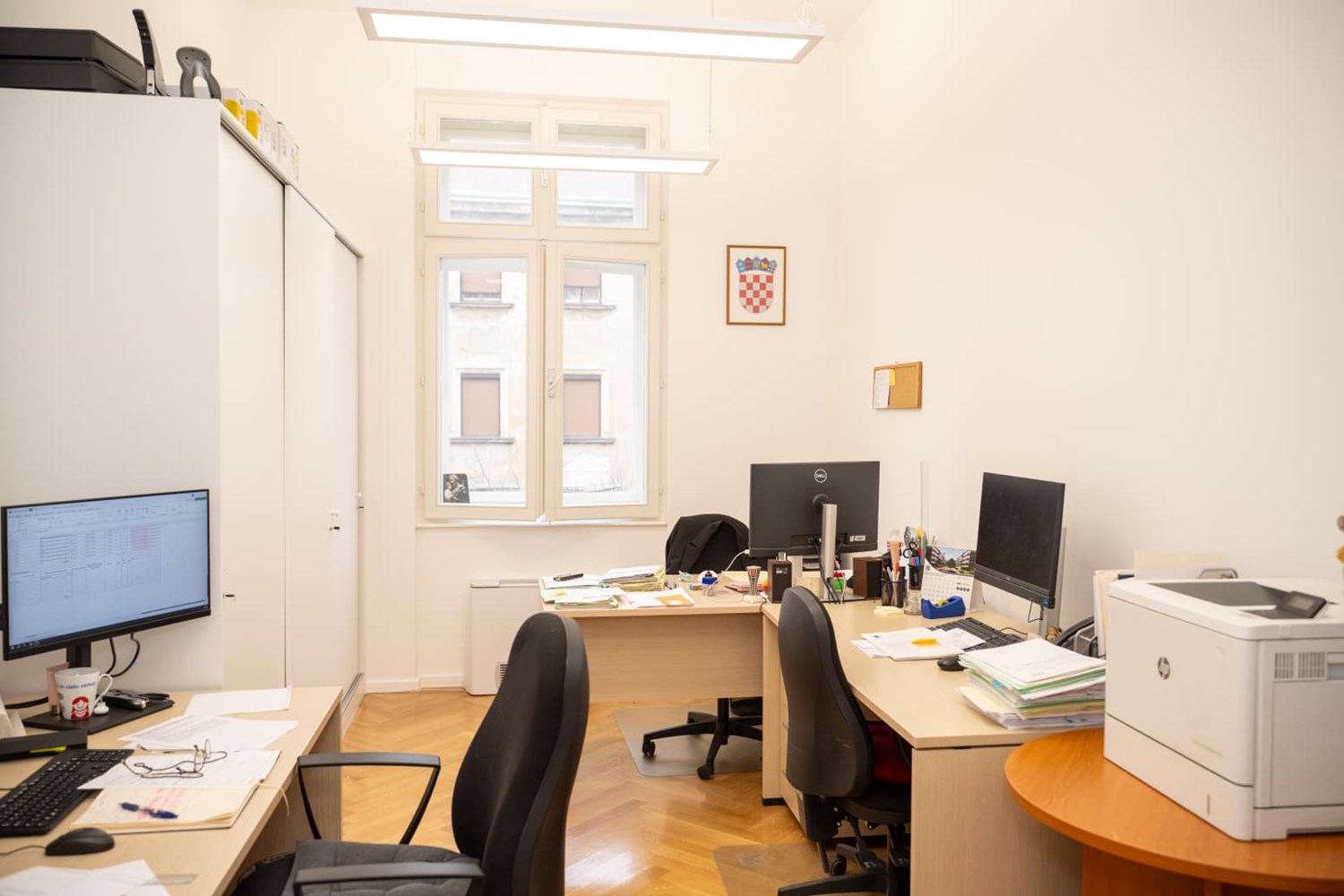
On Monday Deputy Prime Minister and Minister Branko Bačić, accompanied by state secretaries and associates, visited several post-earthquake locations in Zagreb city centre: Pod zidom 8 – Ban Josip Jelačić Square 7, Ban Josip Jelačić Square 6 and Ilica 3 – Frane Petrića 2. Following comprehensive reconstruction, a building owned by the Republic of Croatia was also reopened today at Prilaz Gjure Deželića 7, which accommodates officials of the Ministry of Physical Planning, Construction and State Assets.
At the locations Pod zidom 8 and Ban Josip Jelačić Square 7, comprehensive reconstruction is in progress in the form of self-reconstruction model, and it entails ten housing and commercial units, with a total cost of 2.04 million euro. The minister also visited the construction site at Ban Josip Jelačić Square 6, where organised comprehensive reconstruction is underway for a building of seven floors, worth 3.19 million euro, with the completion date planned in August 2026. The tour also included the building at Ilica 3 and Petrićeva 2, where organised level two comprehensive reconstruction takes place, worth 2.39 million euro. Before the reconstruction, this building housed the Croatian Bureau of Statistics
Deputy Prime Minister and Minister Bačić pointed out that the Government had opted for comprehensive, full reconstruction, which slowed down the entire process, but which also made the reconstructed buildings far more resistant to earthquakes compared with the previous state.
“The reconstruction would be done faster and cheaper if the Government had decided to reconstruct the damaged buildings only to restore them to their pre-earthquake condition. We have opted for a modern approach to post-earthquake structural reconstruction to build buildings which are more valuable, which are safer. The building at Ban Josip Jelačić Square that we visited today was 25% earthquake-resistant in mechanical sense - now the figure is 80%,” Bačić said.
This was also his response to some residents’ objections that the reconstruction is late and that it will entail additional costs. He added that the very city centre mostly includes buildings that are around 120 years old.
“I am sorry we haven’t finished it sooner and the deadlines have been pushed back. Only those involved in post-earthquake structural reconstruction know that it is very difficult to know from the start what awaits you at the end of the reconstruction process. In any case, the state pays rent for these residents while they await the reconstruction to be over, so it is our goal as well to bring these residents back to their buildings as soon as possible, because this results in double costs for us,” Bačić said.
With regard to complex structural reconstructions, mostly referring to multiapartment buildings in Zagreb Lower Town, Minister Bačić said the decision was made to enter block reconstruction, which entails multiple buildings in a single block, which in turn significantly facilitates the process in terms of organisation and public procurement procedures. It has already been done in the so-called Mali Vatikan complex, while other blocks are already in preparation or the tender has been conducted. The reconstruction of Blok 20 and Kukovićeva kuća also in Zagreb will soon begin.
Comprehensively reconstructed state-owned building now open
The Minister also visited a comprehensively reconstructed building owned by the Republic of Croatia at Prilaz Djure Deželića 7 in Zagreb, which as of today houses officials of the Ministry of Physical Planning, Construction and State Assets.
The comprehensive reconstruction project of the public use building began in March 2023. The building’s gross surface area is 1,091.16 m2, while the funds were secured through the EU Solidarity Fund, the National Recovery and Resilience Plan and the state budget of the Republic of Croatia. The total worth of the reconstruction project was nearly 4 million euro.
Over 4,200 locations reconstructed in the Zagreb earthquake area
With regard to both Zagreb and Petrinja earthquake areas, Minister Bačić pointed out that by now nearly 14,500 locations have been reconstructed - over 54,000 separate units of private property and 804 reconstruction projects of public use buildings and infrastructure.
A total of 498 houses has been built (Petrinja area 453, Zagreb area 45), while 204 houses are under construction (Petrinja area 158, Zagreb area 48).
A total of 83 houses has been purchased instead of replacement houses being built, and two purchases are in progress.
Currently, Zagreb and Petrinja earthquake areas include 1,917 open construction sites, while additional 1,419 locations, worth 133.1 million euro, are in the public procurement procedure.
In the area affected by the Zagreb earthquake, 4,246 reconstruction projects have been completed - 3,796 referring to private buildings and family houses (comprising 39,024 housing units) and 450 referring to public use buildings and infrastructure financed from the EUSF. At the moment, 716 construction sites are open - 646 for private objects and 70 for public use buildings, while 48 family houses are under construction; 45 already built.
From the beginning of reconstruction in Zagreb and Petrinja earthquake areas, a total of 4.23 billion euro has been spent - 2.46 billion euro for Zagreb area and 1.77 billion euro for Petrinja area.
The 2026 state budget allocates 1.02 billion euro for reconstruction.
The entire reconstruction process following both earthquakes will be done by 2030, Minister Bačić recalled.