- Published: 14.01.2026.
New Collective Agreement in Construction Sector signed in Križevci
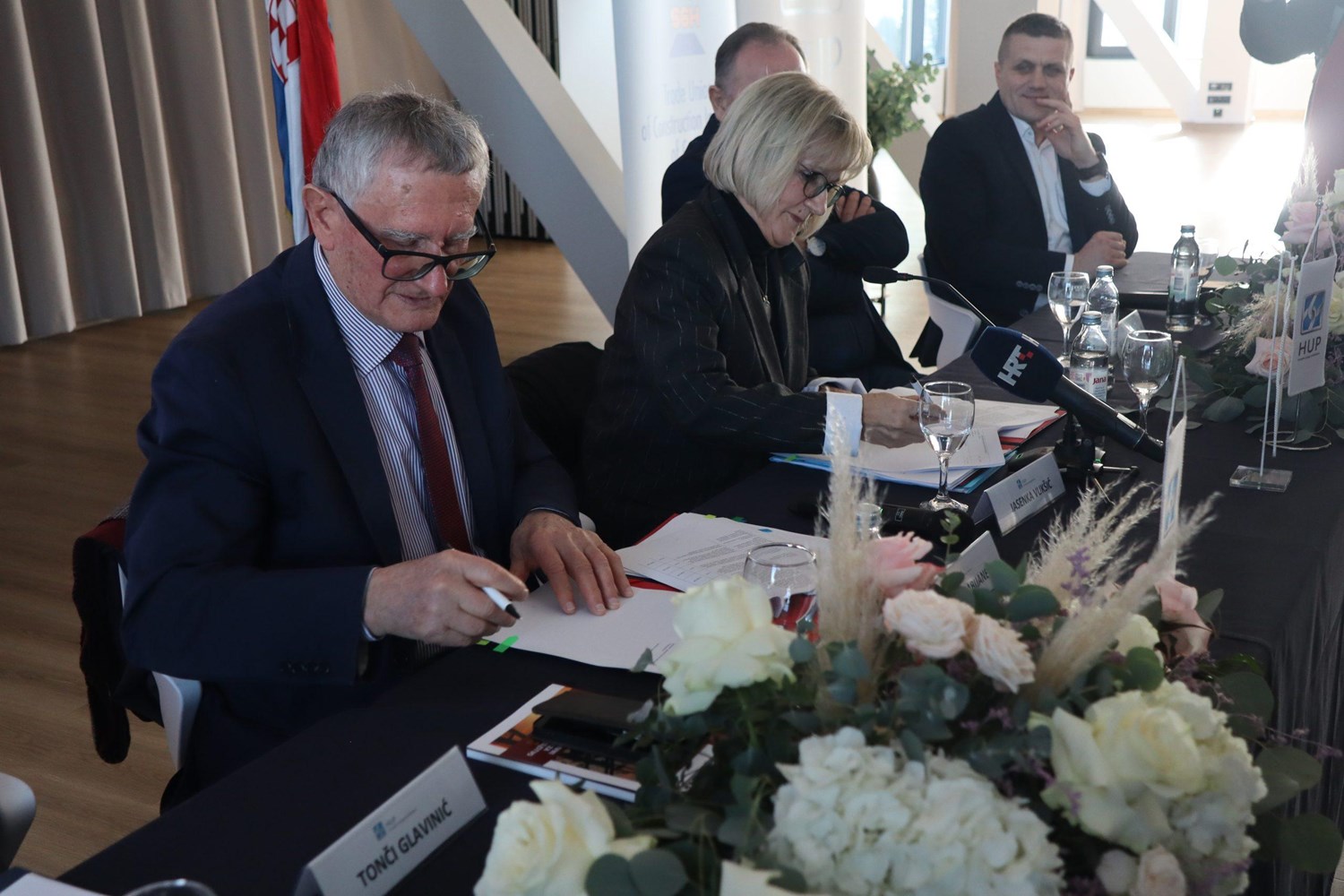
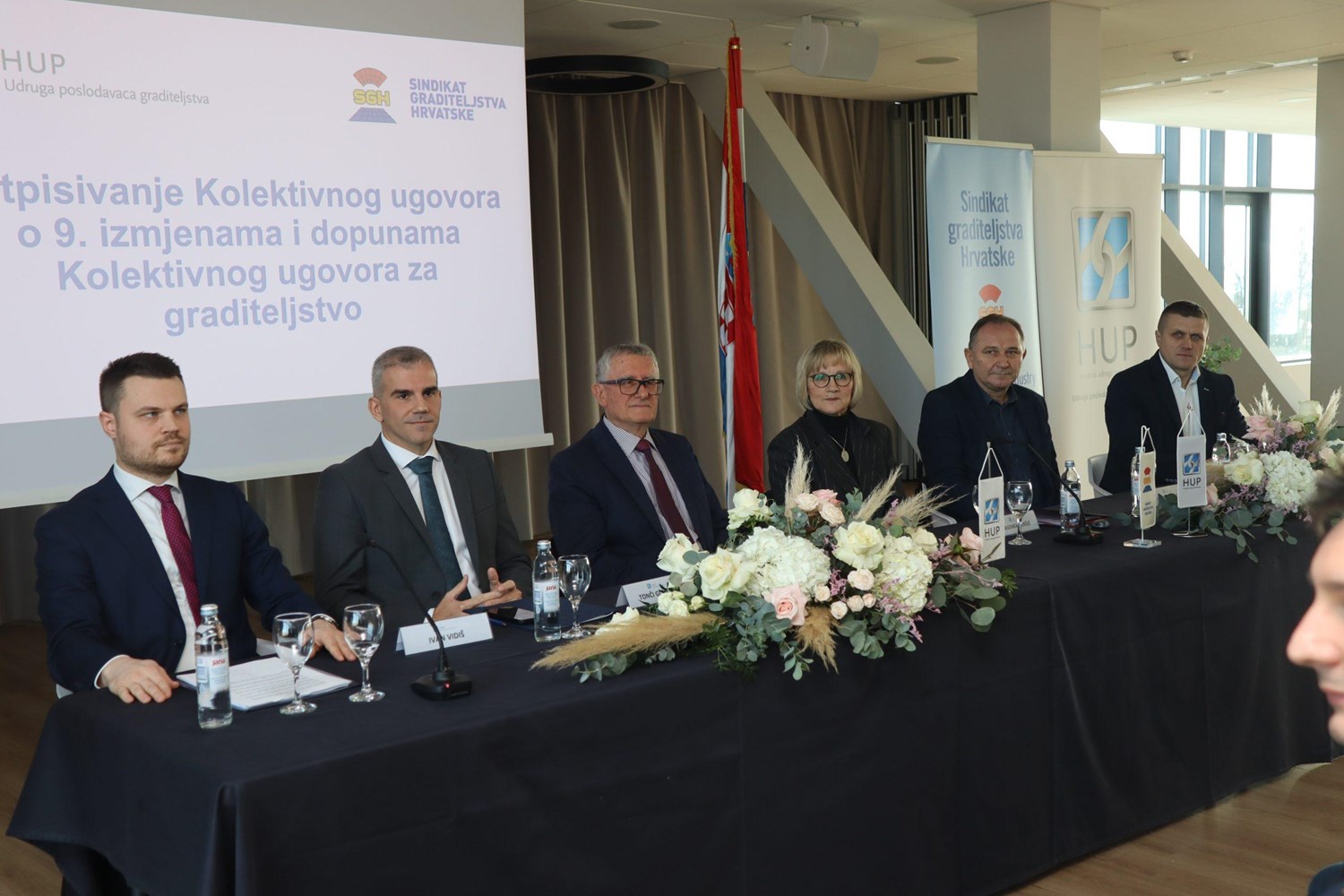
Today in Križevci, the Croatian Employers’ Association for the Construction Sector (HUP-UPG) and the Construction Workers’ Union of Croatia (SGH) signed the ninth amendments to the Collective Agreement for the Construction Sector. With these amendments, the gross basic salary for all workers in all complexity groups will increase by 10% from February 2026, as well as employee benefits. The signing ceremony was also attended by State Secretary Tonči Glavinić.
At the beginning of the signing ceremony, Mayor Tomislav Katanović greeted the attendees on behalf of the hosts, emphasising the importance of construction as one of the essential sectors for local and national economic development: “It is also important to protect the rights of workers in the construction sector, and I am glad the Agreement is signed in Križevci.”
The Agreement was signed by President of HUP-UPG Mirko Habijanec and President of SGH Jasenka Vukšić. The ninth amendments to the Collective Agreement for the Construction Sector enter into force on February 1, 2026. The current Collective Agreement for the Construction Sector was concluded in 2015, and the latest amendments have been adopted with the aim of ensuring sustainable development of the construction sector, strengthening efficient implementation of the Agreement and improving the status of workers.
Mirko Habijanec, the President of HUP-UPG, pointed out: “With these amendments, salaries for all workers will be increased by 10%, as well as employee benefits by 10%. The purpose of the Agreement is to ensure salary growth and an organised and regulated system for our sector. The need for technical professions is huge, but it is not followed by the education system or the state control, which should focus more on combating unfair competition, namely in public procurement. It is essential that, according to the Public Procurement Act, mandatory reason for exclusion from public tenders be unpaid salaries and non-compliance with other rights from the Collective Agreement.”
President of SGH Jasenka Vukšić emphasised: “These amendments confirm that sustainable solutions for the construction sector can be achieved through a cooperative social dialogue. Since the average salary in construction is 20% lower than the national average in the Republic of Croatia, we expect that this 10% growth of basic salaries for all complexity groups, together with more efficient payment control, will reduce the gap at least partially. Growth of salaries and benefits is important for both workers and employers, as it contributes to more stable and better-quality working conditions, retaining of domestic workers and long-term sustainability of the sector.
State Secretary at the Ministry of Physical Planning, Construction and State Assets Tonči Glavinić pointed out: “The construction sector is one of the key drivers of economic growth and infrastructural development of the Republic of Croatia. These amendments are an important step forward towards a more stable, regulated and fair labour market in the sector. Also, today the construction sector marks its best days, fostered by numerous large private and state investments over the past years. In particular - reconstruction, which entails 4.2 billion euro from the state budget and European funds, and over 14,200 private and public buildings have been reconstructed, including hospitals, schools and kindergartens. Such results would not be possible without a strong and good-quality construction sector essential for realising all these projects.”
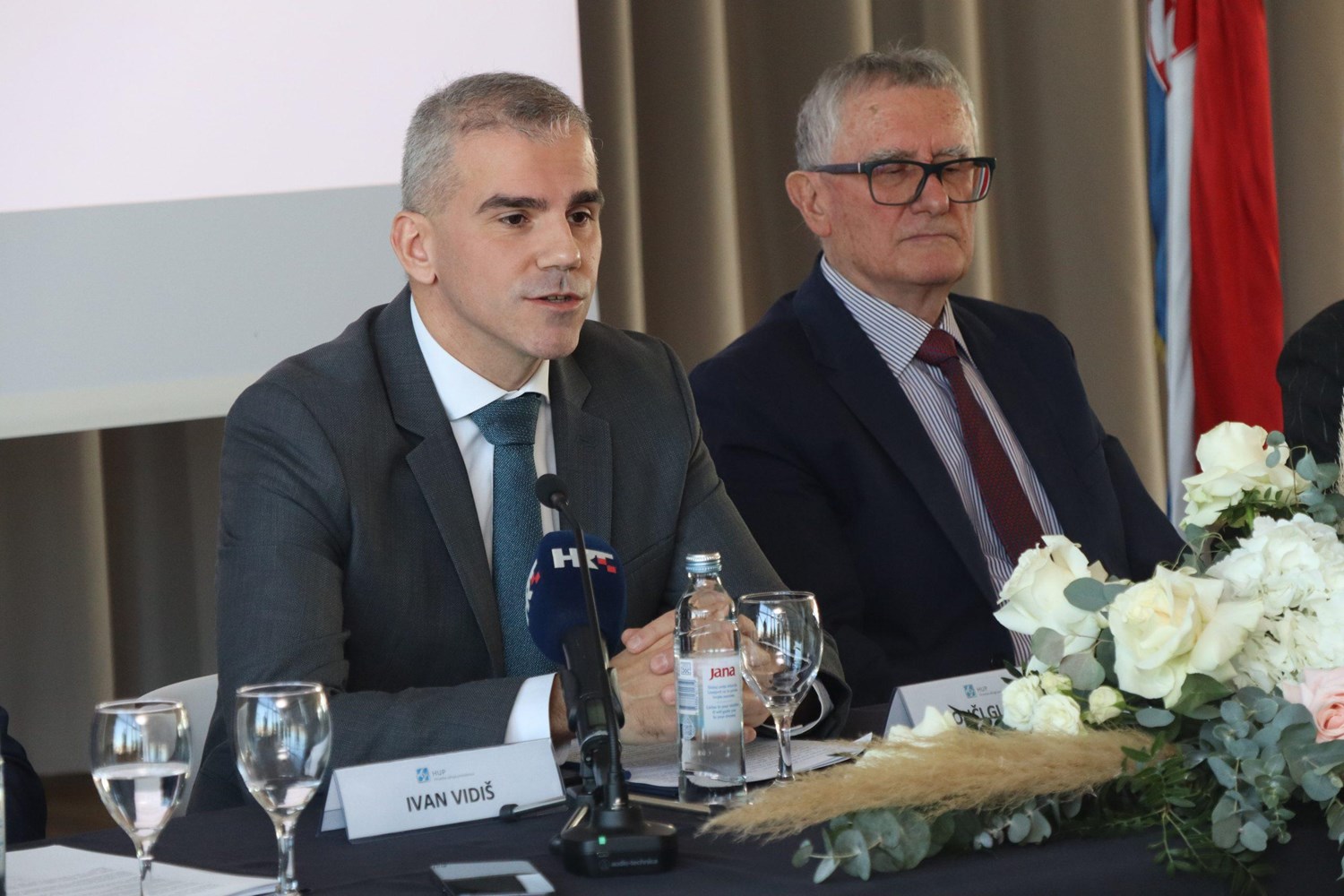
State Secretary at the Ministry of Labour, Pension System, Family and Social Policy Ivan Vidiš highlighted the importance of the Collective Agreement: “The Collective Agreement is extremely important for ensuring just and dignified working conditions and strengthening legal certainty of workers and employers. Increased salaries and improved benefits send a clear message that social dialogue gets results and that joint action is the right response to challenges such as labour shortages, unfair competitions and grey economy.”
President of the Union of Autonomous Trade Unions of Croatia Mladen Novosel said that social dialogue in construction has the longest and the most stable tradition based on joint responsibility of all stakeholders, adding that: “Increased salaries and benefits will further contribute to the stability of the labour market and to combating unfair competition, while it also presents a strong incentive for other sectors to respond to contemporary labour challenges through social dialogue.”
At the very signing ceremony, special emphasis was put on the importance of good-quality and timely project realisation, removing unfair competition, namely in public procurement, combating grey economy, undeclared work and social dumping. The focus was also on the need for creating more stable business and employment conditions, preventing the outflow of domestic labour, and improving the material status of workers and the competitiveness of Croatian constructors.