- Published: 03.10.2025.
Opening ceremony of 17th Electrical Engineers' Days in Bol on Brač
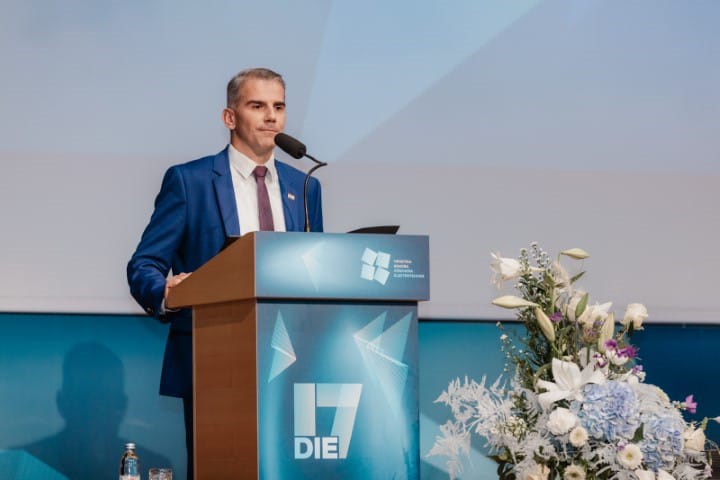
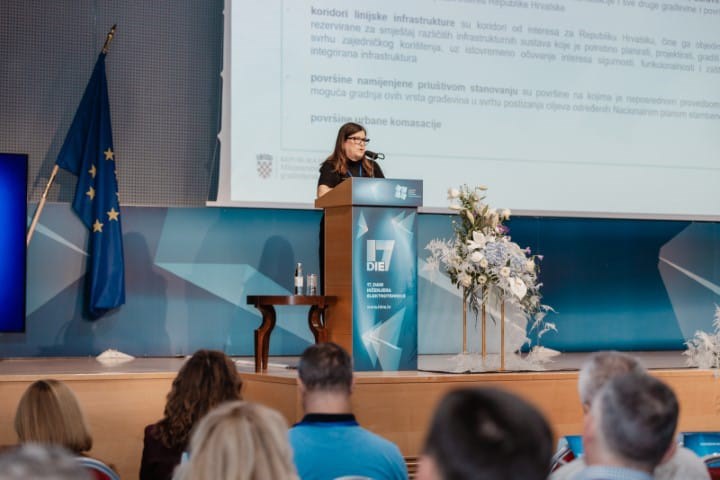
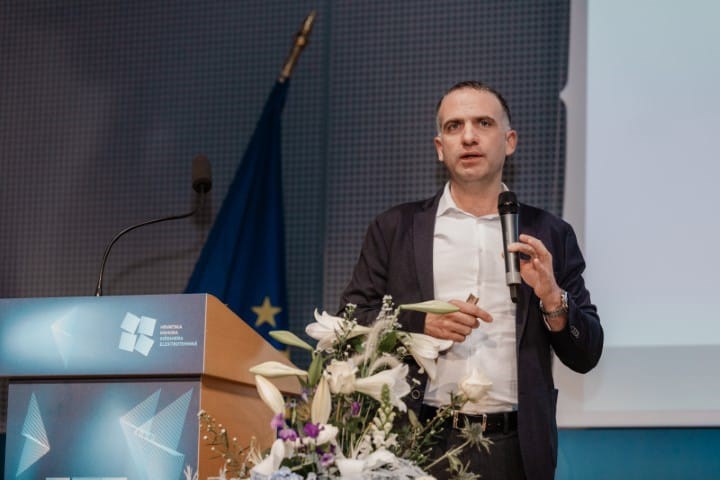
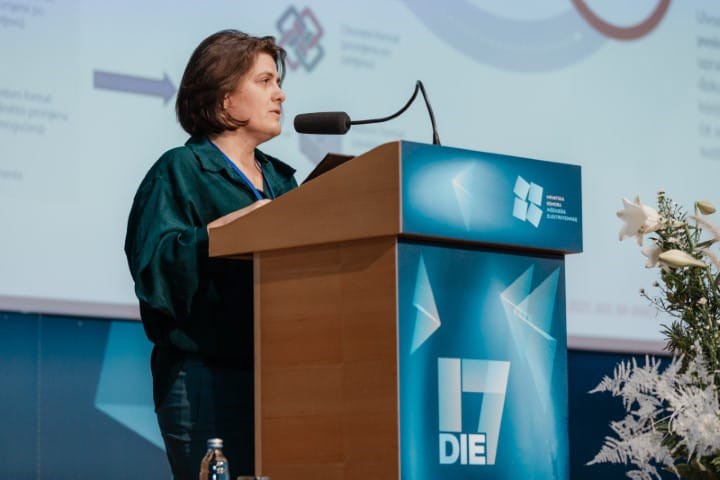
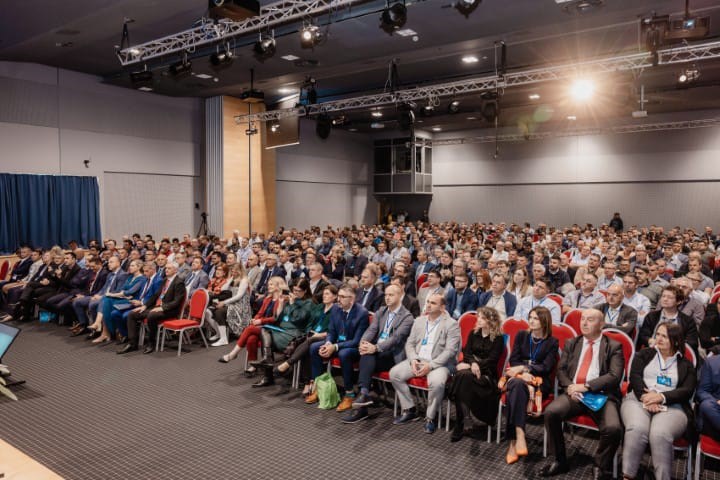
The 17th Electrical Engineers’ Days, the largest annual convention of professionals in the field of electrical engineering in Croatia takes place in the Bluesan Elaphusa hotel. This traditional event gathers over 1,300 participants, and this year’s programme entails topics ranging from battery systems for electrical vehicles to artificial intelligence and green hydrogen. At the opening ceremony, on behalf of Deputy Prime Minister and Minister Branko Bačić, State Secretary Tonči Glavinić addressed the audience.
The event is organised by the Croatian Chamber of Electrical Engineers, under the auspices of the Ministry of Physical Planning, Construction and State Assets. The opening ceremony focused on electrical engineers as key creators of new values and fundamental pillars of society.“Chambers of engineers in Croatia represent the foundation for building a strong, responsible and ethical professional surrounding; their work contributes not only to the development of infrastructural and technological solutions, but also to shaping social values and improving the lives of all citizens of Croatia,” State Secretary Tonči Glavinić said.
President of the Croatian Chamber of Electrical Engineers Natko Vučković pointed out that electrical engineering has always been present, but in times of energy transition and unstoppable digital transformation, its importance becomes vital.
“Engineers are the baseline power of society, and, in these times, electrical engineers are key figures and will surely mark the upcoming period,” he said, adding that professionals in the field of electrical engineering, particularly in the field of energy, are increasingly in demand in the global job market, while Croatian tradition and knowledge provide a solid foundation for new generations. Representatives of faculties of electrical engineering in Zagreb, Split, Rijeka and Osijek confirmed that the interest of young people in energy continuously increases. The convention’s special guests included students of the Faculty of Electrical Engineering in Split, as a confirmation that it is precisely young people who have the most important roles for the future.
On behalf of the President of the Republic of Croatia, Professor Velibor Mačkić, PhD, advisor for economy, addressed the participants highlighting that “it is precisely expertise and knowledge of electrical engineers what makes the fundamental systems supporting our daily lives.”
This year’s programme centres on three key topics of the present and the future - battery systems for energy storage, artificial intelligence and hydrogen as a green energy source. A special emphasis is put on energy transition and digitalisation, processes which mark this decade.
With regard to digitalisation, the State Secretary pointed out that “the Ministry of Physical Planning, Construction and State Assets continuously develops the Physical Planning Information System (ISPU) - a state interoperable and multiplatform system for entry, verification, publication and exchange of almost all kinds of spatial data.”
The convention also addressed the new legislative framework - the Building Act, the Physical Planning Act and the Act on Energy Efficiency in Building Construction. They are planned to be adopted by the end of the year, and their development also included electrical engineers. The acts are open for public consultation until October 4, and their goal is to simplify the procedures, improve transparency and accelerate business processes. They have been developed in accordance with the National Housing Policy Plan until 2030, which emphasises affordable and sustainable housing and more efficient space management.
“The Proposal of the Physical Planning Act introduces a new physical planning system, along with introducing completely new institutes for urban and infrastructural projects, while the Building Act and the Act on Energy Efficiency in Building Construction are separated in the field of energy efficiency,” the State Secretary pointed out.
Apart from State Secretary Glavinić, the legislative novelties were also addressed by other representatives of the Ministry of Physical Planning, Construction and State Assets. Director of Directorate for Physical Planning Snježana Đurišić further presented the Physical Planning Act, including the digital development of spatial plans in the ePlans application and new instruments of spatial planning.
Head of Sector for Investments and Digitization of Investment Processes Margareta Premužić presented the BIM model, which will be implemented in the Building Act. It will enable joint action through a digital 3D model to all participants, which will further improve informatisation and transparency in construction.
Director of Institute for Spatial Development Bojan Linardić presented the Proposal of the Spatial Plan of the Exclusive Economic Zone of the Republic of Croatia in the Adriatic Sea, a strategic document which, for the first time, comprehensively defines maritime spatial planning of Croatia, with an emphasis on natural resources management, marine ecosystem protection and economic activity development in accordance with European and international standards. The Proposal of the EEZ Spatial Plan was open for public consultation until September 30, 2025.
- Presentation on the new legislative framework is available here.
The participants of the convention are given the opportunity to exchange experiences, discuss the challenges of the profession and explore new possibilities for innovative solutions through lectures, discussions and round tables. The Electrical Engineers’ Days also include a humanitarian aspect - the Croatian Chamber of Electrical Engineers has donated funds to the Brački pupoljci association in support of their dedication to children.
“In order for electrical engineering to be efficient as the leader of development, it is necessary to continuously support innovation and new technologies improving productivity, reducing costs and contributing to sustainability. Introducing digitalisation, applying smart materials and technologies, as well implementing sustainable practices, are key factors which can improve the sector,” the State Secretary concluded.
More information and a detailed programme can be found on the official website of the Croatian Chamber of Electrical Engineers.
Photo: HKIE